Dental crowns are one of the most common restorative treatments in dentistry, but many patients wonder exactly how long they can expect their crown to last. The answer depends on several factors including the material used, your oral hygiene habits, and the location of the crown in your mouth. Understanding the typical dental crown lifespan can help you make informed decisions about your dental care and budget for future maintenance.
At TruSmile Now, Dr. Hanna Choi, DDS, provides comprehensive general and restorative dental care with a gentle, patient-centered approach. Dr. Hanna Choi focuses on helping patients maintain optimal oral health while ensuring every treatment is tailored to their unique needs and delivers the best possible outcome.

Most dental crowns have an average dental crown lifespan of 10 to 30 years when properly maintained. However, some crowns can last even longer with excellent oral hygiene and regular dental checkups. The wide range in longevity reflects the many variables that influence how well a crown holds up over time, from the type of material chosen to daily habits like teeth grinding or consuming hard foods.
⏱️ AVERAGE DENTAL CROWN LIFESPAN BY MATERIAL TYPE
The material your crown is made from plays a significant role in determining its dental crown lifespan. Each type of crown material offers different benefits in terms of durability, aesthetics, and cost. Understanding these differences helps you choose the right option for your specific needs and expectations.
Gold and metal alloy crowns typically last the longest, often exceeding 20 to 30 years or more. These crowns are incredibly durable and resistant to wear, making them ideal for back molars where chewing forces are strongest. However, their metallic appearance makes them less popular for visible front teeth.
Porcelain-fused-to-metal (PFM) crowns combine strength with better aesthetics, offering a dental crown lifespan of 10 to 20 years. These crowns feature a metal base for strength covered with tooth-colored porcelain. While they look more natural than full metal crowns, the porcelain layer can chip over time, and a dark line may become visible at the gum line as gums recede.
All-ceramic or all-porcelain crowns provide the most natural appearance and typically last 10 to 15 years. These crowns are an excellent choice for front teeth where aesthetics are paramount. Modern ceramic materials like zirconia have significantly improved the strength and durability of all-ceramic crowns, with some zirconia crowns lasting 15 to 25 years.
According to peer-reviewed research on crown survival rates, the 10-year survival rate for dental crowns ranges from 90% to 95%, depending on the material and location in the mouth. This demonstrates that most crowns perform well for at least a decade when properly cared for.
🦷 FACTORS THAT AFFECT HOW LONG YOUR CROWN LASTS
While material type significantly influences dental crown lifespan, several other factors determine how long your specific crown will last. Understanding these variables helps you maximize the longevity of your restoration and avoid premature failure.

Oral Hygiene Practices
Your daily oral hygiene routine directly impacts your dental crown lifespan. Crowns themselves cannot decay, but the natural tooth structure underneath remains vulnerable to cavities. Poor oral hygiene can lead to decay at the crown margins where the restoration meets your natural tooth, potentially requiring crown replacement.
Brushing twice daily with fluoride toothpaste, flossing once per day, and using an antimicrobial mouthwash helps protect both your crown and the underlying tooth. Pay special attention to the gum line where your crown meets your natural tooth, as this area is particularly susceptible to plaque buildup and decay.
Location in the Mouth
Crowns on back teeth (molars and premolars) experience significantly more biting force than front teeth, which can affect longevity. Molars can endure forces of 150 to 200 pounds during chewing, placing considerable stress on restorations. This is why stronger materials like gold or zirconia are often recommended for posterior crowns.
Front teeth crowns typically experience less force but are more prone to trauma from accidents or biting into hard objects. The American Dental Association recommends avoiding habits like chewing ice, biting fingernails, or opening packages with your teeth to protect both natural teeth and restorations.
Teeth Grinding and Clenching
Bruxism (teeth grinding or clenching) is one of the most common causes of premature crown failure. The excessive forces generated during grinding can crack, chip, or loosen crowns, significantly reducing their lifespan. Many people grind their teeth unconsciously during sleep, making this a particularly challenging issue to address.
If you grind your teeth, wearing a custom nightguard can protect your crowns and natural teeth from excessive wear. At TruSmile Now, we can fabricate a custom-fitted nightguard in our state-of-the-art in-house dental lab, ensuring optimal fit and protection for your investment in dental restorations.
Dietary Habits
What you eat and drink affects your dental crown lifespan. While crowns are durable, they are not indestructible. Avoid chewing on hard objects like ice, hard candy, popcorn kernels, or bones, as these can crack or chip both crowns and natural teeth. Sticky foods like caramels or taffy can also pull crowns loose, especially if the underlying cement has weakened over time.
Acidic beverages and foods can erode the cement holding your crown in place and damage the exposed tooth structure at the crown margins. Limiting consumption of sodas, citrus fruits, and acidic drinks helps protect both your crown and your natural teeth.
✅ SIGNS YOUR CROWN MAY NEED REPLACEMENT
Even with excellent care, crowns eventually show signs of wear or damage. Recognizing these warning signs early allows you to address problems before they become more serious and potentially compromise the underlying tooth structure.
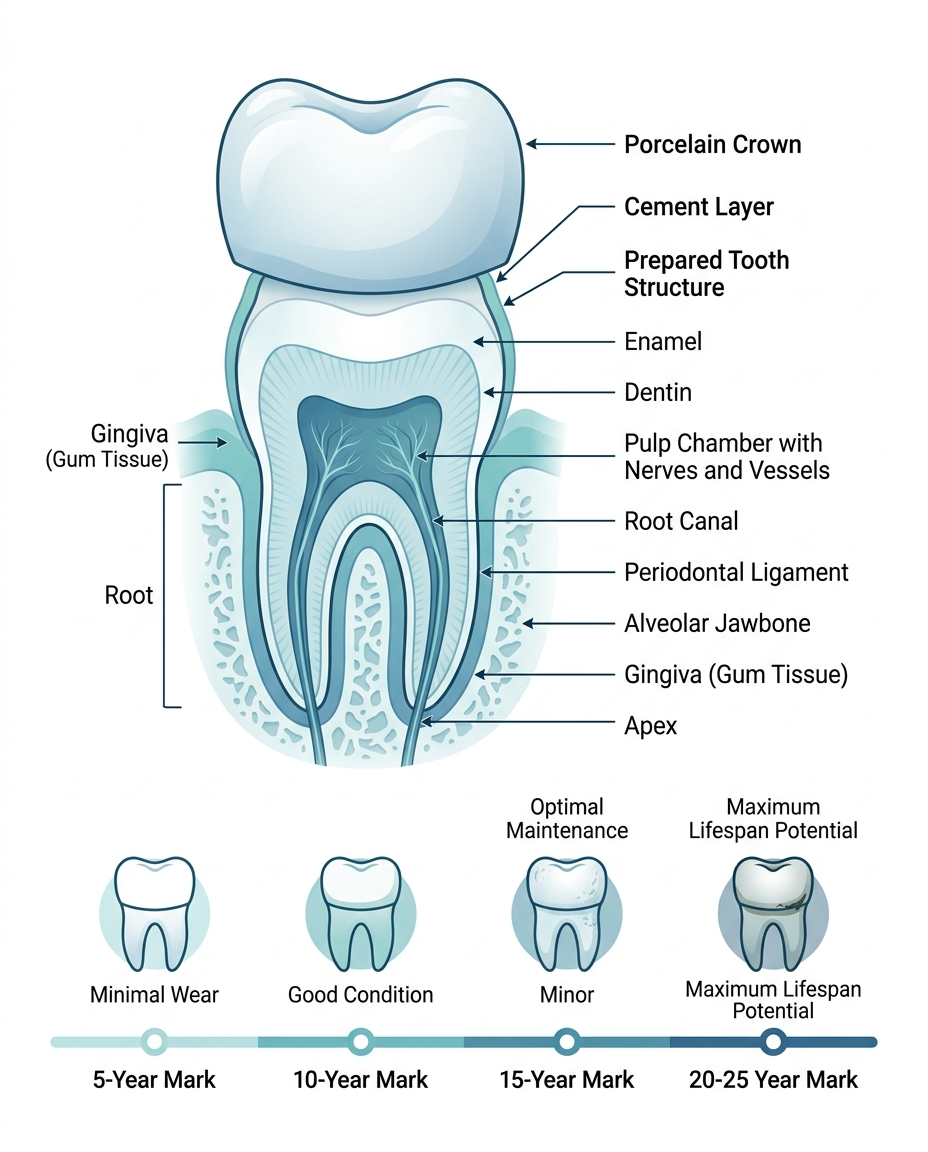
Visible cracks, chips, or wear are obvious indicators that your crown has sustained damage. Even small chips can allow bacteria to penetrate beneath the crown, leading to decay of the underlying tooth. If you notice any damage to your crown, schedule an appointment promptly to assess whether repair or replacement is necessary.
Sensitivity or pain around the crowned tooth may indicate decay beneath the crown, a loose crown, or issues with the underlying tooth structure. While some temporary sensitivity is normal immediately after crown placement, persistent or worsening discomfort requires professional evaluation.
A loose or moving crown needs immediate attention. If your crown feels loose or you can move it with your tongue, the cement bond has likely failed. Contact your dentist right away, as a loose crown leaves the prepared tooth vulnerable to damage and decay. In many cases, a loose crown can be re-cemented if caught early, potentially extending its lifespan without requiring a complete replacement.
Dark lines at the gum line are common with porcelain-fused-to-metal crowns as gums recede over time, exposing the metal base. While this is primarily a cosmetic concern, it may indicate that your crown has been in place for many years and could benefit from replacement with a more modern all-ceramic option for improved aesthetics.
Persistent bad taste or odor around a crowned tooth can signal decay or infection beneath the restoration. This often occurs when bacteria penetrate through gaps at the crown margins or when the underlying tooth develops decay. Professional evaluation and treatment are essential to prevent further damage.
🏥 HOW TRUSMILE NOW EXTENDS YOUR CROWN’S LIFESPAN
At TruSmile Now, we take several steps to ensure your crowns are built to last. Our state-of-the-art in-house dental lab allows us to maintain strict quality control over every crown we create, ensuring precise fit, proper margins, and optimal aesthetics. This level of control simply is not possible when outsourcing crown fabrication to external laboratories.
Dr. Hanna Choi uses advanced digital scanning technology to create highly accurate impressions of your prepared tooth. Digital impressions eliminate the distortion and inaccuracies that can occur with traditional impression materials, resulting in crowns that fit more precisely and last longer. A well-fitting crown with tight margins prevents bacterial infiltration and reduces the risk of decay around the restoration.
We also provide comprehensive patient education on proper crown care and maintenance. During your crown placement appointment, our team will review optimal oral hygiene techniques, dietary recommendations, and warning signs that might indicate a problem with your restoration. Regular checkups every six months allow us to monitor your crown’s condition and address any issues before they become serious.
Our New Patient Special at $49 includes a comprehensive exam, X-rays, and consultation where we can evaluate any existing crowns and discuss options for replacement if needed. We offer flexible payment plans through Cherry to make crown treatment affordable and accessible.
💰 CROWN REPLACEMENT COSTS AND INSURANCE COVERAGE
Understanding the cost of crown replacement helps you budget for this eventual necessity. While crowns are designed to last many years, they are not permanent and will eventually need replacement. The cost varies depending on the material chosen, the complexity of the case, and your insurance coverage.
Most dental insurance plans cover a portion of crown costs, typically 50% after your deductible is met. However, many insurance policies have waiting periods for major restorative work and may only cover crown replacement if the existing crown is more than five years old and shows clear signs of failure. We accept most major insurance plans including Delta Dental, Cigna, UnitedHealthcare, MetLife, Aetna, Guardian, and Blue Cross Blue Shield of Arizona.
For patients without insurance or those facing out-of-pocket costs, we offer flexible payment plans through Cherry. These financing options allow you to spread the cost of treatment over manageable monthly payments, making quality dental care accessible regardless of your budget.
Investing in a high-quality crown from the start, combined with excellent oral hygiene and regular dental checkups, maximizes your restoration’s lifespan and provides the best long-term value. While premium materials like zirconia may cost more initially, their superior durability often makes them more cost-effective over time.
📋 MAXIMIZING YOUR CROWN’S LONGEVITY: BEST PRACTICES
Taking proactive steps to care for your crown significantly extends its functional life. The following best practices help you get the maximum return on your investment in dental restoration:
Maintain excellent oral hygiene: Brush twice daily with a soft-bristled toothbrush and fluoride toothpaste, floss daily around your crown, and use an antimicrobial mouthwash. Pay special attention to the area where your crown meets your gum line.
Attend regular dental checkups: Professional cleanings and examinations every six months allow your dentist to monitor your crown’s condition, identify potential problems early, and remove plaque and tartar that you cannot eliminate at home.
Protect your teeth from trauma: If you play contact sports, wear a custom mouthguard. If you grind your teeth at night, use a nightguard to protect your crowns and natural teeth from excessive forces.
Avoid damaging habits: Do not chew ice, bite your fingernails, open packages with your teeth, or use your teeth as tools. These habits place excessive stress on crowns and can cause premature failure.
Be mindful of your diet: Limit sticky and hard foods that can damage or dislodge crowns. If you do eat these foods, chew carefully and avoid biting directly on your crowned teeth when possible.
The National Institute of Dental and Craniofacial Research emphasizes that proper oral hygiene and regular professional care are the most important factors in maintaining both natural teeth and dental restorations for life.
❓ FREQUENTLY ASKED QUESTIONS
What is the average dental crown lifespan?
Most dental crowns last between 10 and 30 years, depending on the material used, location in your mouth, and how well you care for them. Gold and metal alloy crowns typically last longest (20-30+ years), while all-ceramic crowns generally last 10-15 years. With excellent oral hygiene and regular dental checkups, many crowns can last even longer than these averages.
Can a dental crown last 30 years or more?
Yes, some crowns can last 30 years or longer, particularly gold or metal alloy crowns on back teeth. However, this requires excellent oral hygiene, regular dental checkups, avoiding damaging habits like teeth grinding, and being careful with hard or sticky foods. Even if a crown lasts this long, it may eventually need replacement due to wear, changes in your bite, or aesthetic concerns.
What causes a crown to fail before its expected lifespan?
Common causes of premature crown failure include poor oral hygiene leading to decay beneath the crown, teeth grinding or clenching, trauma from accidents or biting hard objects, a poor initial fit, and weakening of the cement bond over time. Regular dental checkups help identify potential problems early before they lead to complete crown failure.
How do I know when my crown needs to be replaced?
Signs that your crown may need replacement include visible cracks or chips, persistent sensitivity or pain around the crowned tooth, a loose or moving crown, dark lines appearing at the gum line, or a bad taste or odor around the restoration. If you notice any of these symptoms, schedule an appointment with your dentist for evaluation. Regular checkups also allow your dentist to identify wear or damage before you notice symptoms.
Does insurance cover crown replacement?
Most dental insurance plans cover a portion of crown replacement costs (typically 50% after your deductible) if the crown is failing or has been in place for at least five years. However, coverage varies by plan, and some policies have waiting periods for major restorative work. Our team at TruSmile Now will work with your insurance provider to maximize your benefits and provide a detailed cost estimate before beginning treatment.
Which crown material lasts the longest?
Gold and metal alloy crowns typically offer the longest dental crown lifespan, often lasting 20 to 30 years or more. However, their metallic appearance makes them less desirable for visible teeth. For front teeth, modern zirconia crowns provide an excellent balance of durability (15-25 year lifespan) and natural aesthetics. Your dentist can help you choose the best material based on the tooth’s location, your bite forces, aesthetic preferences, and budget.
📍 VISIT TRUSMILE NOW – 3 ARIZONA LOCATIONS
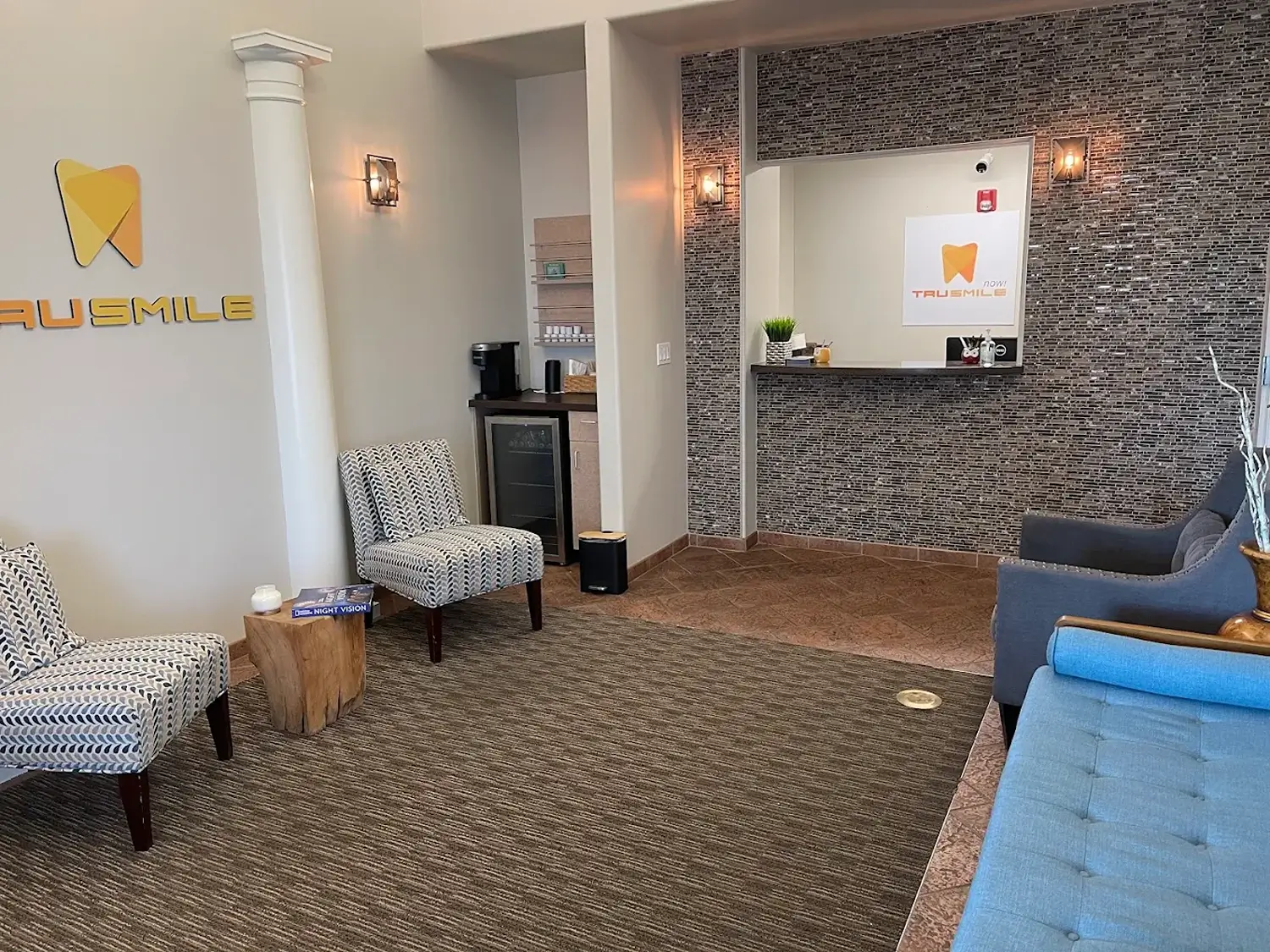
TruSmile Now Peoria
20542 N Lake Pleasant Rd, Suite 113
Peoria, AZ 85382
Phone: (602) 362-0447
Hours: Mon-Thu 9:00 AM – 5:00 PM
TruSmile Now Chandler
2900 W Ray Rd #3
Chandler, AZ 85224
Phone: (480) 393-0687
Hours: Mon-Thu 9:00 AM – 5:00 PM
TruSmile Now Ahwatukee (Phoenix)
4530 E Ray Rd #170
Phoenix, AZ 85044
Phone: (480) 360-4754
Hours: Mon 9-5, Tue 7am-2pm, Wed-Thu 10-7, Fri 8-3, Sat 8am-1pm
Serving Peoria, Chandler, Ahwatukee, Phoenix, Tempe, Mesa, Gilbert, Scottsdale, Glendale, Surprise, and the Greater Phoenix metro area.
New Patient Special: $49 – Includes exam, X-rays, and consultation!
We accept most major insurance including Delta Dental, Cigna, UnitedHealthcare, MetLife, Aetna, BCBS, and more. Medicare Part B accepted for medically necessary treatments.
We offer flexible payment plans through Cherry to make your treatment affordable.
Prefer texting over calling? Lucy, our AI-powered assistant, is always ready to chat. Ask her anything about our services or schedule your visit in seconds.
Ready to learn more about dental crown lifespan and how to maximize your restoration’s longevity? Call any of our locations or schedule online today!
View our before and after gallery to see real patient results!