If you had a root canal years ago, you might wonder about root canal longevity and whether your treated tooth will last. The good news is that most root canal-treated teeth can last a decade or longer with proper care. However, understanding what happens over time, recognizing potential warning signs, and knowing when to seek follow-up care can help you protect your investment in your oral health.
At TruSmile Now, Dr. Hanna Choi, DDS, provides comprehensive general and restorative dental care with a gentle, patient-centered approach. Dr. Hanna Choi focuses on helping patients maintain optimal oral health while ensuring every treatment is tailored to their unique needs and delivers the best possible outcome.

This comprehensive guide explores root canal longevity, what typically happens to treated teeth after 10 years, potential complications, and how to maximize the lifespan of your restoration.
🦷 UNDERSTANDING ROOT CANAL LONGEVITY
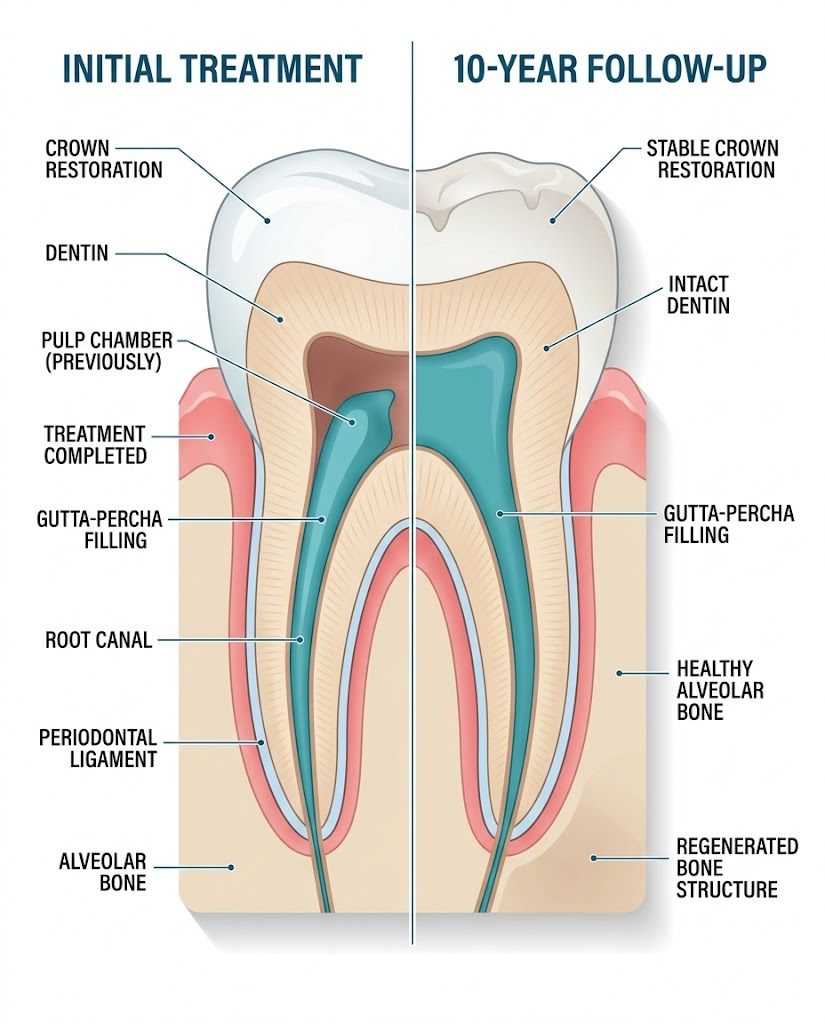
Root canal longevity depends on multiple factors, including the quality of the initial treatment, the type of restoration placed, and how well you maintain your oral hygiene. According to peer-reviewed research on endodontic treatment outcomes, teeth that receive root canal therapy show impressive survival rates, with 97% of treated teeth surviving at 10 years and approximately 81% still functional at 20 years post-treatment.
These statistics demonstrate that root canal longevity is excellent when treatment is performed correctly and the tooth receives proper follow-up care. The American Dental Association confirms that root canal therapy is a safe, predictable procedure that can save natural teeth for many years.
However, not all root canal-treated teeth experience the same outcomes. Several variables influence how long your tooth will last:
- Quality of the crown or restoration: A well-fitted crown protects the tooth from fracture and reinfection
- Location of the tooth: Molars experience more chewing force and may wear faster than front teeth
- Oral hygiene habits: Daily brushing and flossing prevent gum disease that can compromise the tooth
- Regular dental checkups: Professional monitoring catches small problems before they become serious
- Tooth structure remaining: Teeth with more natural structure tend to last longer
⏰ WHAT TYPICALLY HAPPENS 10 YEARS AFTER A ROOT CANAL
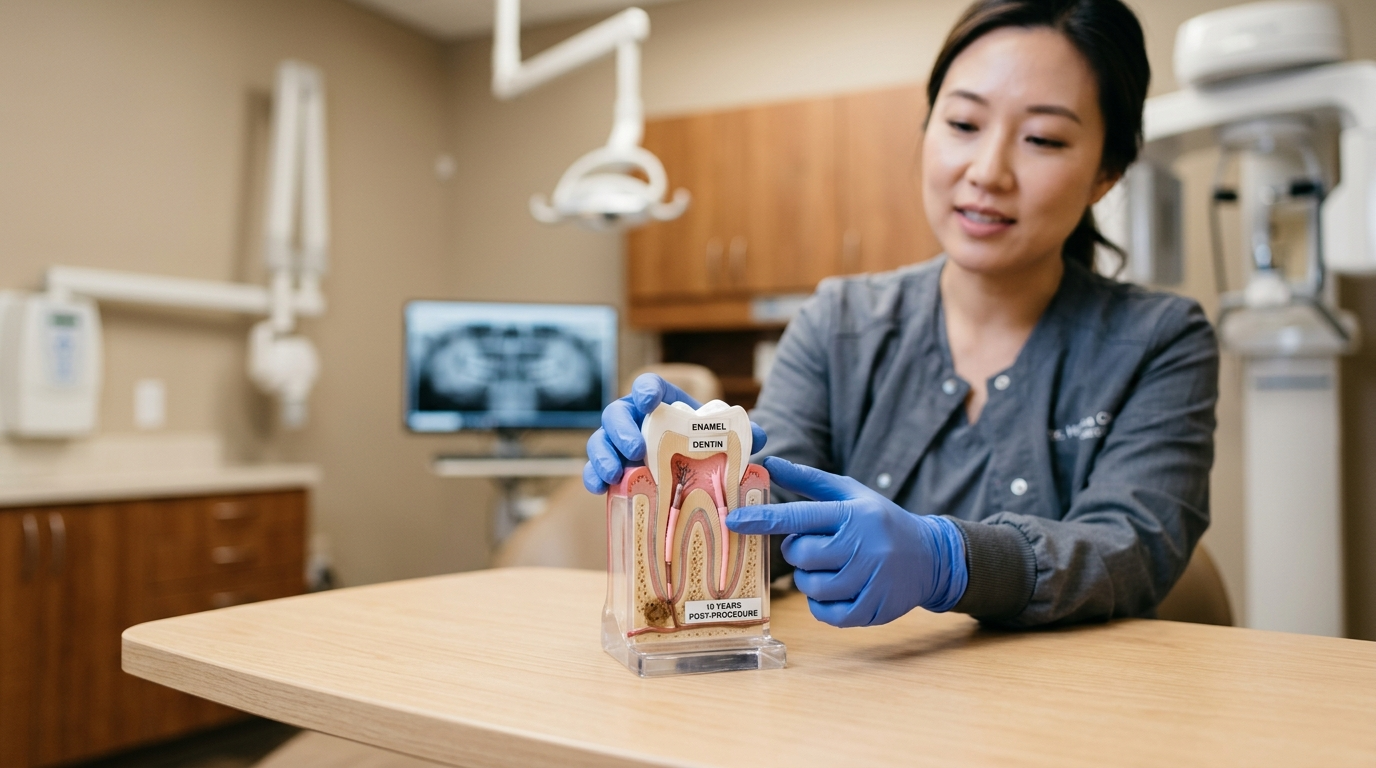
After a decade, most patients with good root canal longevity experience no issues at all. The tooth continues to function normally, allowing you to eat, speak, and smile without discomfort. However, some changes may occur over this timeframe that warrant attention.
Crown Wear and Deterioration
The crown placed over your root canal-treated tooth experiences daily wear from chewing, grinding, and exposure to temperature changes. After 10 years, you might notice:
- Minor chips or cracks in the porcelain
- Slight discoloration or staining
- Worn chewing surfaces that affect your bite
- Loosening of the crown due to cement breakdown
- Gum recession exposing the crown margin
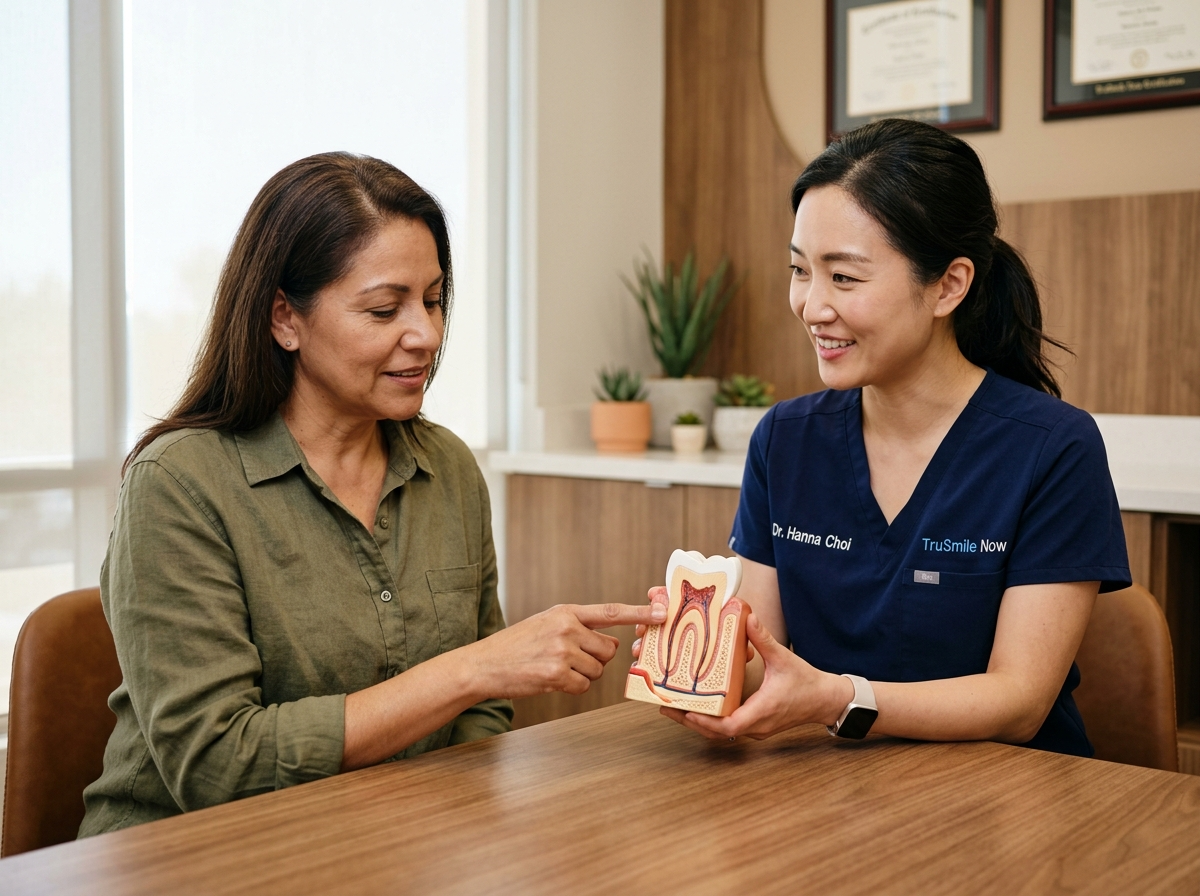
These issues do not necessarily mean your root canal has failed. Often, simply replacing the crown restores full function and appearance. At TruSmile Now, our state-of-the-art in-house dental lab allows us to fabricate custom crowns quickly, often in a single visit, minimizing your time in the dental chair.
Potential Reinfection
While less common, reinfection can occur years after treatment if bacteria find a pathway back into the tooth. This might happen through:
- A cracked or damaged crown allowing bacterial penetration
- Decay developing around the crown margins
- Additional root canals that were not initially treated
- Breakdown of the root canal filling material over time
Signs of reinfection include persistent pain, sensitivity to pressure, swelling near the tooth, or the development of a pimple-like bump on the gums. If you experience these symptoms, contact our office immediately for evaluation. We offer same-day emergency appointments to address urgent dental concerns promptly.
Tooth Fracture Risk
Root canal-treated teeth become more brittle over time because they no longer receive nutrients from the pulp. After 10 years, the risk of vertical root fracture increases, particularly in molars that endure heavy chewing forces. A fractured root often cannot be saved and may require extraction followed by replacement with a dental implant.
Protecting your tooth with a properly fitted crown significantly reduces fracture risk. Patients who grind their teeth should also consider wearing a nightguard to minimize excessive forces on restored teeth.
✅ HOW TO MAXIMIZE ROOT CANAL LONGEVITY
The best way to ensure excellent root canal longevity is through consistent preventive care and prompt attention to any concerns. Here are proven strategies to help your treated tooth last for decades:
Maintain Excellent Oral Hygiene
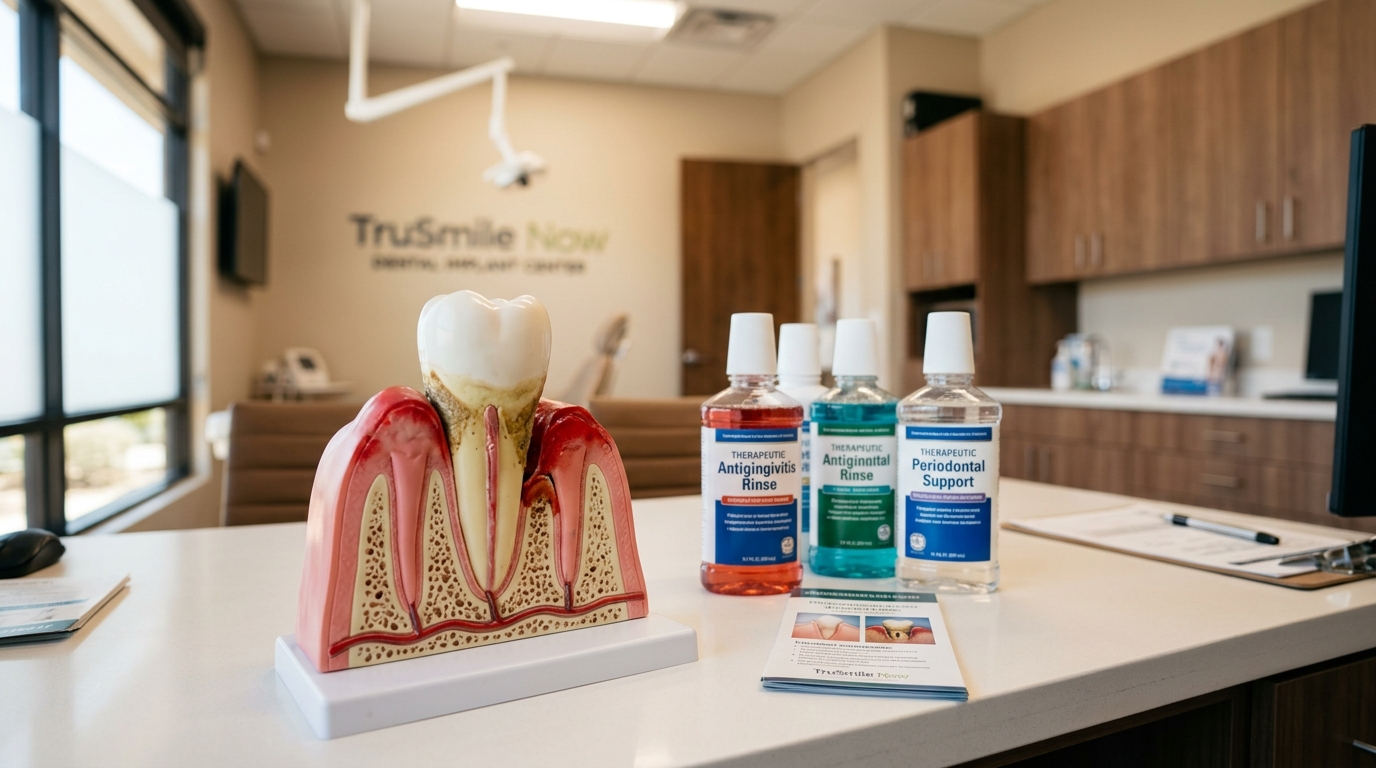
Even though the tooth no longer has living pulp tissue, it remains susceptible to decay and gum disease. Brush twice daily with fluoride toothpaste, floss daily around the crown margins, and use an antimicrobial mouthwash to reduce bacterial buildup. The National Institute of Dental and Craniofacial Research emphasizes that good oral hygiene is essential for long-term dental health.
Schedule Regular Dental Checkups
Professional examinations every six months allow Dr. Hanna Choi to monitor the condition of your crown, check for signs of decay or infection, and take periodic X-rays to assess the root and surrounding bone. Early detection of problems dramatically improves treatment outcomes and preserves root canal longevity.
Our New Patient Special is just $49 and includes a comprehensive exam, necessary X-rays, and consultation. This affordable option makes it easy to establish care and monitor your dental restorations.
Protect Your Teeth from Trauma
Avoid using your teeth as tools to open packages or crack nuts. If you play contact sports, wear a custom mouthguard. If you grind your teeth at night, ask about a nightguard to protect your restorations from excessive wear and fracture.
Address Problems Promptly
Never ignore pain, sensitivity, or changes in your bite. What starts as a minor issue can quickly escalate if left untreated. Our team at TruSmile Now makes it easy to get care when you need it, with convenient hours across three Arizona locations and Lucy, our AI assistant, available 24/7 to help you schedule appointments.
🔄 WHEN RETREATMENT OR EXTRACTION BECOMES NECESSARY
Despite your best efforts, some root canal-treated teeth develop complications that require additional intervention. Understanding your options helps you make informed decisions about your dental health.
Endodontic Retreatment
If reinfection occurs but the tooth structure remains sound, retreatment may be possible. This involves removing the existing crown and filling material, cleaning and disinfecting the canals again, and placing new filling material before restoring the tooth with a new crown. Success rates for retreatment are good when performed by experienced practitioners.
Extraction and Replacement
When a tooth fractures vertically, develops severe bone loss, or cannot be retreated successfully, extraction becomes the best option. Modern dental implant technology provides an excellent replacement solution that looks, feels, and functions like a natural tooth.
At TruSmile Now, single dental implants start at just $2,699, making this permanent solution accessible to more patients. We offer flexible payment plans through Cherry to make treatment affordable, and we accept most major insurance plans including Delta Dental, Cigna, UnitedHealthcare, MetLife, Aetna, and BCBS.
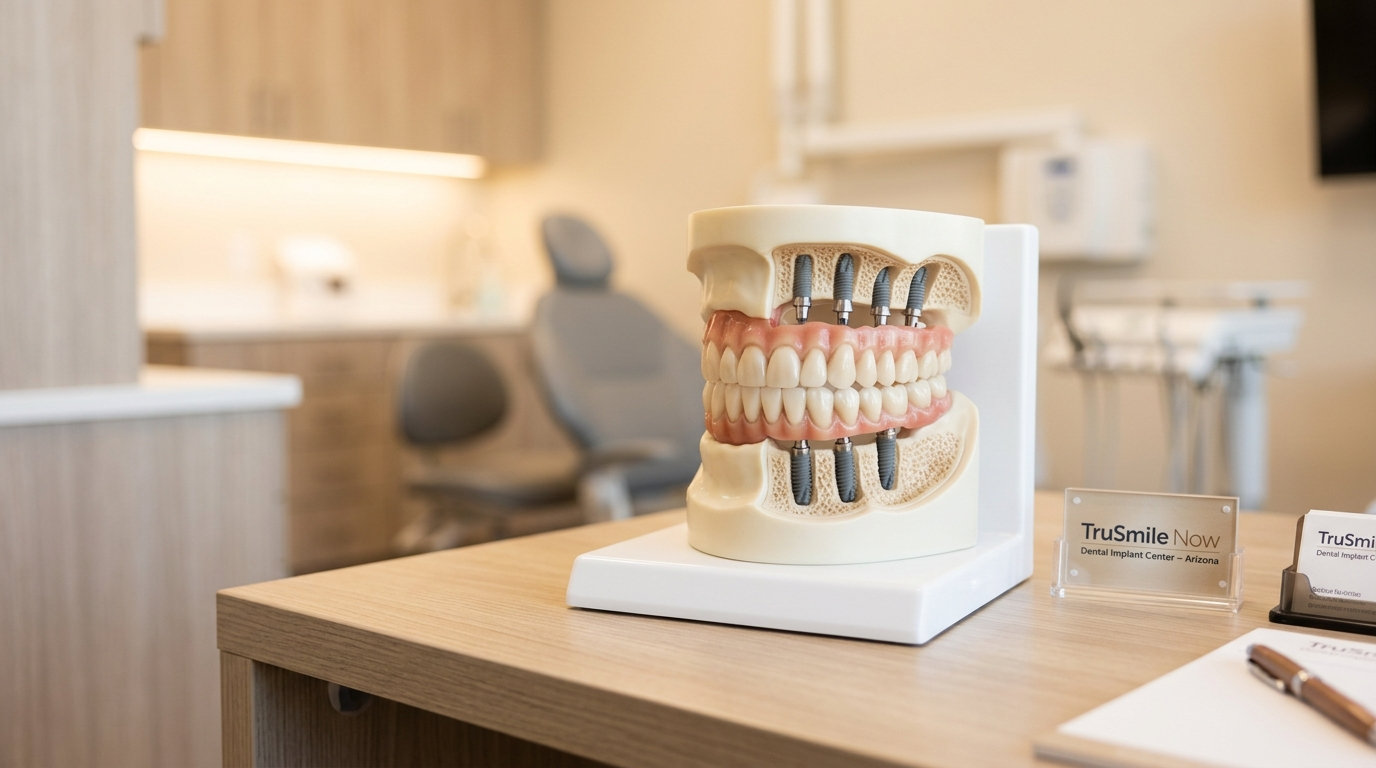
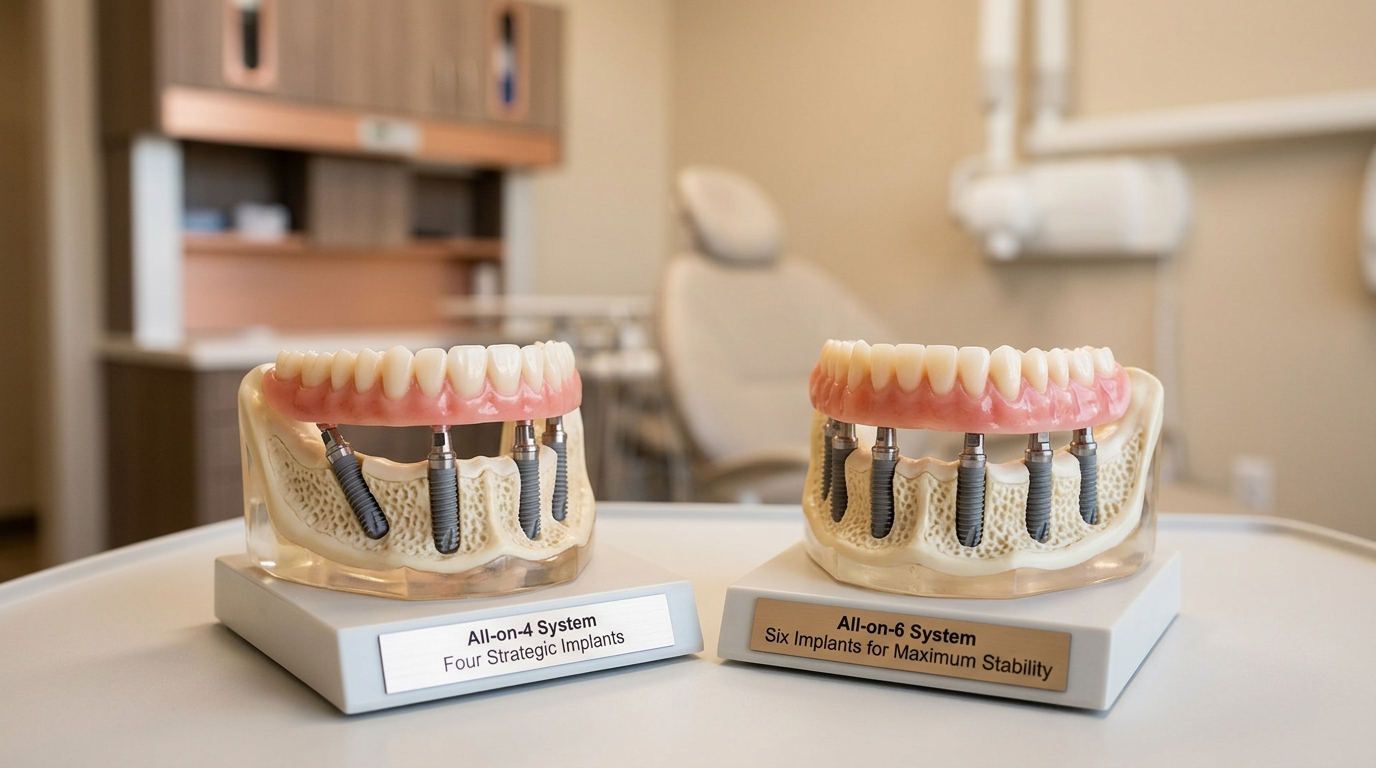
For patients who have lost multiple teeth or are facing extensive dental work, All-on-4 dental implants provide a comprehensive solution that restores an entire arch with just four strategically placed implants. This treatment starts at $9,999 and can transform your smile in a single day.
💰 COST CONSIDERATIONS FOR LONG-TERM ROOT CANAL CARE
Maintaining root canal longevity involves some ongoing costs, but these are typically modest compared to the expense of tooth replacement. Regular cleanings and checkups, which most insurance plans cover, represent your primary investment in preventive care.
If your crown needs replacement after 10 years, costs vary depending on the material and complexity. We provide transparent pricing and work with you to find solutions that fit your budget. Many patients appreciate our in-house dental lab, which eliminates third-party markups and reduces the time needed to complete restorations.
We accept Medicare Part B for medically necessary treatments, making us one of the few Arizona practices that can help eligible patients access coverage for certain dental procedures. Our knowledgeable team can verify your benefits and explain what your insurance will cover.
🏥 WHY CHOOSE TRUSMILE NOW FOR ROOT CANAL FOLLOW-UP CARE
Whether you need routine monitoring or are experiencing concerns about a tooth treated years ago, TruSmile Now offers comprehensive care backed by advanced technology and experienced professionals. Our practice stands out for several reasons:
- State-of-the-art in-house dental lab: Custom crowns, bridges, and prosthetics made on-site for faster service
- Free consultations with 3D Cone Beam CT scan: Advanced imaging provides detailed views of tooth structure and bone
- Same-day emergency appointments: Prompt care when you experience pain or other urgent symptoms
- Six experienced doctors: Specialists spanning all areas of dentistry under one roof
- Convenient locations: Three Arizona offices in Peoria, Chandler, and Ahwatukee (Phoenix)
- Flexible financing options: Payment plans through Cherry make treatment accessible
Dr. Hanna Choi brings extensive experience in general and restorative dentistry, providing compassionate care that puts patients at ease. Whether you need a simple checkup or complex restorative work, you will receive personalized attention focused on achieving the best possible outcome.
❓ FREQUENTLY ASKED QUESTIONS
How long does root canal longevity typically last?
Root canal longevity varies by individual, but research shows that 97% of treated teeth survive at 10 years and approximately 81% remain functional at 20 years. Proper care, including regular dental visits and good oral hygiene, significantly extends the lifespan of root canal-treated teeth.
What are signs that my root canal might be failing after 10 years?
Warning signs include persistent pain or sensitivity, swelling near the tooth, a pimple-like bump on the gums, discoloration, or loosening of the crown. If you experience any of these symptoms, schedule an evaluation immediately. Early intervention often prevents more extensive treatment.
Will I need to replace the crown on my root canal-treated tooth?
Many crowns last 10-15 years or longer, but wear, damage, or gum recession may eventually require replacement. Regular dental checkups allow your dentist to monitor the crown’s condition and recommend replacement when necessary to maintain protection and appearance.
Can a root canal-treated tooth get cavities?
Yes, the tooth structure can still develop decay, particularly around the crown margins where bacteria can accumulate. Maintaining excellent oral hygiene and attending regular cleanings helps prevent cavities and protects the longevity of your restoration.
What happens if my root canal-treated tooth cracks?
Treatment depends on the location and severity of the crack. Minor cracks may be repaired with bonding or a new crown. Vertical root fractures typically cannot be saved and require extraction. A dental implant provides an excellent permanent replacement option.
Does insurance cover follow-up care for root canal-treated teeth?
Most dental insurance plans cover routine exams, cleanings, and X-rays, which are essential for monitoring treated teeth. Coverage for crown replacement or retreatment varies by plan. Our team can verify your benefits and explain your coverage before treatment begins.
📍 VISIT TRUSMILE NOW – 3 ARIZONA LOCATIONS
TruSmile Now Peoria
20542 N Lake Pleasant Rd, Suite 113
Peoria, AZ 85382
Phone: (602) 362-0447
Hours: Mon-Thu 9:00 AM – 5:00 PM
TruSmile Now Chandler
2900 W Ray Rd #3
Chandler, AZ 85224
Phone: (480) 393-0687
Hours: Mon-Thu 9:00 AM – 5:00 PM
TruSmile Now Ahwatukee (Phoenix)
4530 E Ray Rd #170
Phoenix, AZ 85044
Phone: (480) 360-4754
Hours: Mon 9-5, Tue 7am-2pm, Wed-Thu 10-7, Fri 8-3, Sat 8am-1pm
Serving Peoria, Chandler, Ahwatukee, Phoenix, Tempe, Mesa, Gilbert, Scottsdale, Glendale, Surprise, and the Greater Phoenix metro area.
New Patient Special: $49 – Includes exam, X-rays, and consultation!
We accept most major insurance including Delta Dental, Cigna, UnitedHealthcare, MetLife, Aetna, BCBS, and more. Medicare Part B accepted for medically necessary treatments.
We offer flexible payment plans through Cherry to make your treatment affordable.
Prefer texting over calling? Lucy, our AI-powered assistant, is always ready to chat. Ask her anything about our services or schedule your visit in seconds.
Ready to protect your root canal longevity? Call any of our locations or schedule online today!
View our before and after gallery to see real patient results!