If you are considering dental veneers to transform your smile, one of the most important questions you will ask is whether veneers are permanent. The answer is yes, dental veneers are considered a permanent cosmetic dental treatment because they require the removal of a thin layer of tooth enamel to bond properly to your natural teeth. This irreversible process means that once you get dental veneers, you will always need some form of restoration on those teeth. However, while the procedure itself is permanent, the veneers themselves are not indestructible and will eventually need replacement after many years of wear.
At TruSmile Now, Dr. Hanna Choi, DDS, provides comprehensive general and restorative dental care with a gentle, patient-centered approach. Dr. Hanna Choi focuses on helping patients maintain optimal oral health while ensuring every treatment is tailored to their unique needs and delivers the best possible outcome.

Understanding the permanence of dental veneers helps you make an informed decision about whether this cosmetic treatment is right for you. In this comprehensive guide, we will explore what makes veneers permanent, how long they typically last, what happens during the procedure, and how to care for your veneers to maximize their lifespan. Whether you are dealing with discolored, chipped, or misaligned teeth, veneers offer a long-lasting solution that can dramatically improve your smile and confidence.
🦷 WHAT MAKES DENTAL VENEERS A PERMANENT PROCEDURE?
Dental veneers are classified as permanent because the preparation process involves permanently altering your natural tooth structure. To properly bond veneers to your teeth, your dentist must remove approximately 0.5 to 0.7 millimeters of enamel from the front surface of each tooth receiving a veneer. This enamel removal serves two critical purposes: it creates space for the veneer so your teeth do not look bulky, and it provides a rough surface that allows for strong bonding.
Once this enamel is removed, it cannot regenerate. Enamel is the hardest substance in the human body, but it lacks living cells, which means it has no ability to repair or regrow itself. According to the American Dental Association, this irreversible nature of enamel removal is what makes dental veneers a permanent commitment. Your teeth will always need protection from some type of restoration, whether that is the original veneers, replacement veneers, or potentially crowns in the future.
However, it is important to distinguish between the permanence of the procedure and the longevity of the veneers themselves. While you will always need coverage on prepared teeth, the actual porcelain or composite veneers are not meant to last forever. They are durable restorations that can serve you well for many years, but they will eventually wear out and require replacement due to normal wear and tear, staining, or damage.
⏰ HOW LONG DO DENTAL VENEERS ACTUALLY LAST?
The lifespan of dental veneers depends primarily on the material used and how well you care for them. Porcelain veneers typically last 10 to 15 years, while composite resin veneers generally last 5 to 7 years. Some patients with excellent oral hygiene and careful habits have kept their porcelain veneers in excellent condition for 20 years or more.
Porcelain veneers are more durable and stain-resistant than composite veneers because porcelain is a ceramic material that closely mimics the translucency and strength of natural tooth enamel. Research published in peer-reviewed dental journals shows that porcelain veneers have survival rates of approximately 93% at 10 years and 83% at 20 years when properly maintained. These impressive statistics demonstrate that while veneers are not permanent restorations, they offer excellent long-term value.

Several factors influence how long your veneers will last:
- Oral hygiene habits: Brushing twice daily, flossing, and regular dental cleanings help prevent decay around the veneer margins.
- Diet and lifestyle: Avoiding extremely hard foods, not using teeth as tools, and limiting staining substances like coffee and red wine can extend veneer life.
- Teeth grinding: Patients who grind or clench their teeth (bruxism) may wear down veneers faster and should wear a nightguard for protection.
- Quality of placement: Veneers placed by experienced cosmetic dentists with proper bonding techniques tend to last longer.
- Material quality: High-quality porcelain veneers crafted in professional dental labs offer superior durability compared to lower-grade materials.
At TruSmile Now, our state-of-the-art in-house dental lab allows us to create high-quality veneers with precise craftsmanship, ensuring optimal fit, function, and aesthetics. This on-site capability also means faster turnaround times and better communication between our dentists and lab technicians throughout the fabrication process.
🔍 THE VENEER PLACEMENT PROCESS: WHAT TO EXPECT
Understanding what happens during the veneer placement process helps clarify why this treatment is considered permanent. The typical process involves two to three appointments spread over several weeks.
Initial Consultation and Planning
During your first visit, your dentist will examine your teeth, discuss your aesthetic goals, and determine if you are a good candidate for veneers. This appointment may include X-rays, photographs, and impressions of your teeth. Your dentist will also discuss the permanent nature of the procedure and ensure you understand the commitment involved. At TruSmile Now, we offer a New Patient Special for just $49, which includes a comprehensive exam, X-rays, and consultation to help you explore your options.
Tooth Preparation
At the second appointment, your dentist will prepare your teeth by removing a thin layer of enamel, typically under local anesthesia for your comfort. The amount removed is minimal but permanent. After preparation, your dentist will take precise impressions of your teeth, which will be sent to the dental lab to create your custom veneers. Temporary veneers are usually placed to protect your prepared teeth while your permanent veneers are being fabricated.
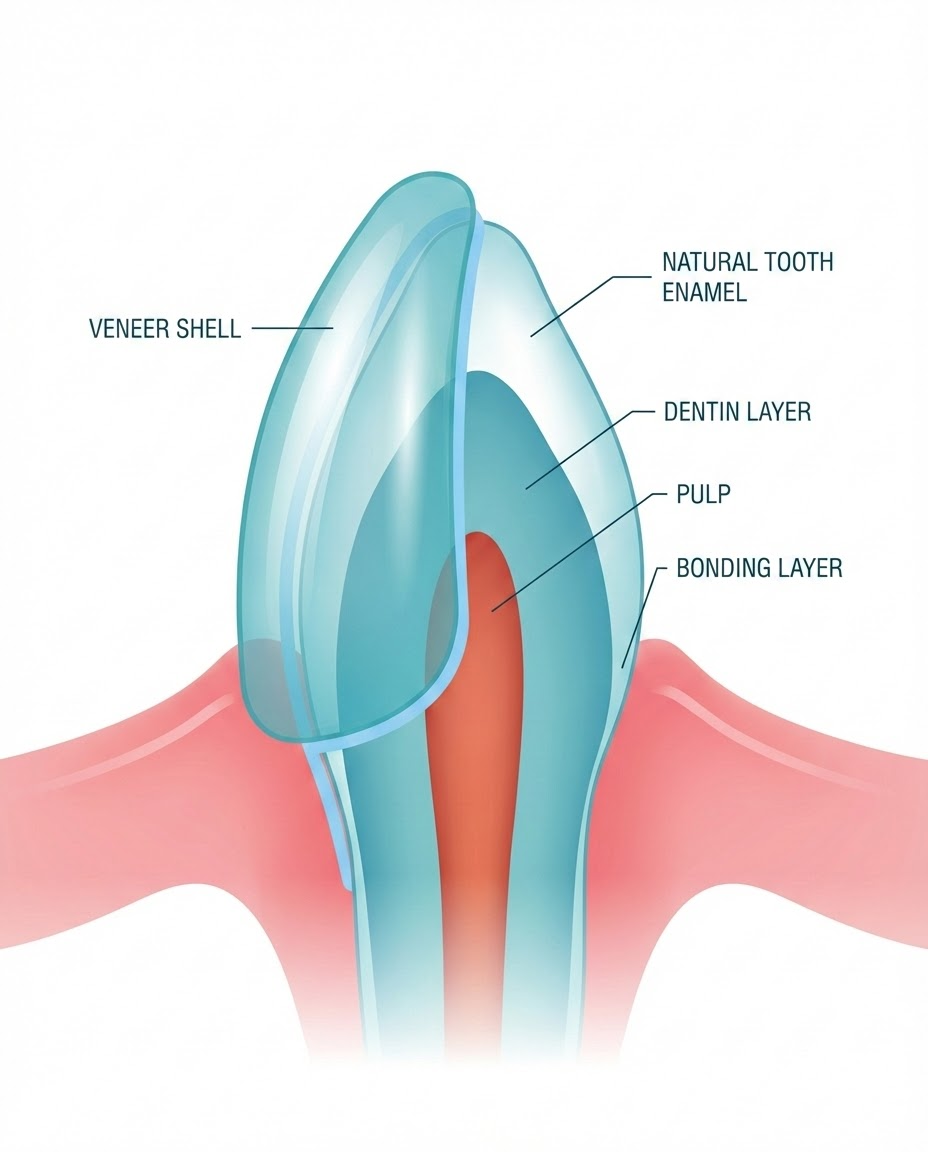
Veneer Bonding
Once your custom veneers are ready (typically 1-2 weeks later), you will return for the final bonding appointment. Your dentist will temporarily place the veneers to check the fit and color, making any necessary adjustments. After confirming everything looks perfect, your teeth will be cleaned and etched to create a strong bonding surface. A special dental cement is applied to each veneer, and they are carefully positioned on your teeth. A curing light hardens the cement, permanently bonding the veneers in place. Any excess cement is removed, and your bite is checked to ensure proper alignment.
Some practices now offer minimal-prep or no-prep veneers, which require little to no enamel removal. These options may be less invasive, but they are not suitable for all patients and may result in slightly bulkier-looking teeth. Your dentist can help you determine which approach is best for your specific situation.
💎 TYPES OF VENEERS AND THEIR PERMANENCE
Not all veneers require the same level of tooth preparation, which affects how permanent they are. Understanding the different types helps you make an informed choice.
Traditional Porcelain Veneers
Traditional porcelain veneers require the most enamel removal (0.5-0.7mm) and are the most permanent option. They offer superior aesthetics, durability, and stain resistance. These are ideal for patients seeking dramatic smile transformations and long-lasting results.
Minimal-Prep Veneers
Minimal-prep veneers (such as Lumineers) require less enamel removal, sometimes as little as 0.3mm. While still considered permanent because some enamel is removed, they are slightly less invasive than traditional veneers. They work best for patients with minor cosmetic concerns and sufficient tooth structure.
Composite Resin Veneers
Composite veneers are made from tooth-colored resin material and can often be placed in a single visit. They typically require minimal enamel removal, making them less permanent than porcelain options. However, they are more prone to staining and chipping, and generally need replacement more frequently.
No-Prep Veneers
True no-prep veneers require no enamel removal at all, making them technically reversible. However, they are only suitable for very specific cases and may look bulky or unnatural on most patients. They are the least common type of veneer.
During your consultation at TruSmile Now, Dr. Hanna Choi will evaluate your teeth and discuss which type of veneer is most appropriate for achieving your desired results while preserving as much natural tooth structure as possible.
✅ CARING FOR YOUR VENEERS TO MAXIMIZE THEIR LIFESPAN
While the veneer procedure is permanent, proper care can significantly extend how long your veneers last before needing replacement. Following these guidelines will help you protect your investment and maintain a beautiful smile for years to come.
Maintain Excellent Oral Hygiene
Brush your teeth at least twice daily with a non-abrasive fluoride toothpaste and a soft-bristled toothbrush. Floss daily to remove plaque and food particles from between teeth and around the veneer margins. According to the National Institute of Dental and Craniofacial Research, proper oral hygiene is essential for preventing decay and gum disease, which can compromise the longevity of any dental restoration.
Attend Regular Dental Checkups
Visit your dentist every six months for professional cleanings and examinations. These appointments allow your dentist to monitor the condition of your veneers, check for any signs of wear or damage, and address problems before they become serious. Regular cleanings also remove plaque and tartar buildup that can lead to gum recession, which may expose the edges of your veneers.
Protect Your Veneers from Damage
Avoid using your teeth as tools to open packages or bite nails. Do not chew on hard objects like ice, pens, or hard candy. If you grind or clench your teeth at night, wear a custom nightguard to protect your veneers from excessive force. If you play contact sports, wear a mouthguard to prevent trauma to your teeth.
Be Mindful of Staining Substances
While porcelain veneers are highly stain-resistant, the bonding cement at the margins can discolor over time. Limit consumption of staining beverages like coffee, tea, red wine, and dark sodas. If you do consume these drinks, rinse your mouth with water afterward or use a straw to minimize contact with your veneers. Avoid tobacco products, which can cause significant staining.
Address Problems Promptly
If you notice any changes in how your veneers feel, such as rough edges, sensitivity, or movement, contact your dentist immediately. Early intervention can often prevent minor issues from becoming major problems that require veneer replacement.
💰 COST CONSIDERATIONS AND FINANCING OPTIONS
Because veneers are a permanent cosmetic procedure, understanding the financial investment is important. The cost of veneers varies based on several factors, including the number of teeth being treated, the type of material used, the complexity of your case, and the geographic location of the practice.
Porcelain veneers typically cost more than composite veneers due to their superior aesthetics and longevity. While this represents a significant investment, many patients find that the long lifespan and transformative results make veneers worthwhile. When you consider that quality porcelain veneers can last 10-15 years or longer, the cost per year of use becomes quite reasonable.
Most dental insurance plans classify veneers as a cosmetic procedure and do not provide coverage. However, if veneers are needed to restore damaged teeth rather than purely for aesthetics, some insurance plans may offer partial coverage. Our team at TruSmile Now can help you understand your insurance benefits and maximize any available coverage.
We offer flexible payment plans through Cherry to make treatment affordable. These financing options allow you to spread the cost of your veneers over manageable monthly payments, making it easier to achieve the smile you have always wanted without financial stress.
❓ FREQUENTLY ASKED QUESTIONS
Can veneers ever be removed or reversed?
No, traditional dental veneers cannot be reversed because the procedure requires permanent removal of tooth enamel. Once enamel is removed, your teeth will always need some form of coverage, whether veneers or crowns. The only exception is true no-prep veneers, which are rare and only suitable for specific cases.
What happens when my veneers need to be replaced?
When veneers wear out or become damaged, your dentist will remove the old veneers and prepare your teeth for new ones. The process is similar to the original placement, though typically less enamel needs to be removed since your teeth were already prepared. New impressions are taken, and replacement veneers are fabricated and bonded to your teeth.
Do veneers damage your natural teeth?
When placed by an experienced dentist, veneers do not damage your natural teeth beyond the necessary enamel removal. The small amount of enamel removed is required for proper bonding and creates space for the veneer. Your teeth remain healthy and functional underneath the veneers. However, poor oral hygiene or improper placement can lead to decay or gum problems around the margins.
Are there any alternatives to permanent veneers?
Yes, alternatives include teeth whitening for discoloration, dental bonding for minor chips or gaps, orthodontic treatment for alignment issues, and crowns for more extensively damaged teeth. Each option has different benefits, limitations, and levels of permanence. During your consultation, your dentist can discuss which treatment best addresses your specific concerns.
How do I know if I am a good candidate for veneers?
Good candidates for veneers have healthy teeth and gums, sufficient enamel for preparation, realistic expectations, and specific cosmetic concerns like discoloration, chips, gaps, or minor misalignment. Patients with severe tooth decay, gum disease, or heavy teeth grinding may need to address these issues first or consider alternative treatments. A comprehensive examination will determine if veneers are right for you.
Will my veneers look natural?
High-quality porcelain veneers are designed to look completely natural. The porcelain material mimics the translucency and light-reflecting properties of natural tooth enamel. Your dentist will carefully match the color, shape, and size of your veneers to complement your facial features and create a harmonious, beautiful smile that looks like your own natural teeth, only better.
🎯 MAKING THE RIGHT DECISION FOR YOUR SMILE
Understanding that dental veneers are a permanent procedure is crucial for making an informed decision about your smile transformation. While the enamel removal is irreversible and you will always need coverage on treated teeth, veneers offer an exceptional long-term solution for correcting a wide range of cosmetic concerns. With proper care and maintenance, quality porcelain veneers can provide you with a beautiful, confident smile for 10-15 years or more.
The permanence of veneers should not be viewed as a drawback but rather as a commitment to improving your smile and quality of life. Most patients who choose veneers are thrilled with their results and find that the confidence boost and improved aesthetics far outweigh any concerns about the procedure being permanent. The key is working with an experienced cosmetic dentist who can properly evaluate your needs, discuss all available options, and create a treatment plan tailored to your unique goals.
At TruSmile Now, we combine advanced technology, experienced doctors, and our in-house dental lab to deliver exceptional veneer results. Our team takes the time to understand your aesthetic goals and ensure you are completely comfortable with your treatment plan before moving forward. We believe that an informed patient is a confident patient, which is why we thoroughly explain every aspect of the veneer process, including the permanent nature of the treatment.
If you are considering dental veneers and want to learn more about whether this permanent cosmetic solution is right for you, we invite you to schedule a consultation at any of our three convenient Arizona locations. During your visit, we will perform a comprehensive evaluation, discuss your options, answer all your questions, and help you make the best decision for your smile.
📍 VISIT TRUSMILE NOW – 3 ARIZONA LOCATIONS
TruSmile Now Peoria
20542 N Lake Pleasant Rd, Suite 113
Peoria, AZ 85382
Phone: (602) 362-0447
Hours: Mon-Thu 9:00 AM – 5:00 PM
TruSmile Now Chandler
2900 W Ray Rd #3
Chandler, AZ 85224
Phone: (480) 393-0687
Hours: Mon-Thu 9:00 AM – 5:00 PM
TruSmile Now Ahwatukee (Phoenix)
4530 E Ray Rd #170
Phoenix, AZ 85044
Phone: (480) 360-4754
Hours: Mon 9-5, Tue 7am-2pm, Wed-Thu 10-7, Fri 8-3, Sat 8am-1pm
Serving Peoria, Chandler, Ahwatukee, Phoenix, Tempe, Mesa, Gilbert, Scottsdale, Glendale, Surprise, and the Greater Phoenix metro area.
New Patient Special: $49 – Includes exam, X-rays, and consultation!
We accept most major insurance including Delta Dental, Cigna, UnitedHealthcare, MetLife, Aetna, BCBS, and more. Medicare Part B accepted for medically necessary treatments.
We offer flexible payment plans through Cherry to make your treatment affordable.
Prefer texting over calling? Lucy, our AI-powered assistant, is always ready to chat. Ask her anything about our services or schedule your visit in seconds.
Ready for dental veneers? Call any of our locations or schedule online today!
View our before and after gallery to see real patient results!