If you are considering porcelain veneers to transform your smile, you probably have one burning question: what happens to the teeth under veneers? It is a valid concern. After all, veneers are a long-term cosmetic investment, and understanding how they affect your natural teeth is crucial before making any decisions. The good news is that when placed correctly by an experienced cosmetic dentist, your teeth under veneers remain healthy and protected for decades.
At TruSmile Now, Dr. Hanna Choi, DDS, provides comprehensive general and restorative dental care with a gentle, patient-centered approach. Dr. Hanna Choi focuses on helping patients maintain optimal oral health while ensuring every treatment is tailored to their unique needs and delivers the best possible outcome.

Many patients worry that veneers damage or weaken their natural teeth. The reality is quite different. Modern veneer techniques are minimally invasive and designed to preserve as much of your natural tooth structure as possible. Understanding what actually happens beneath those beautiful porcelain shells can help you make an informed decision about whether veneers are right for you.
🦷 HOW ARE TEETH UNDER VENEERS PREPARED?
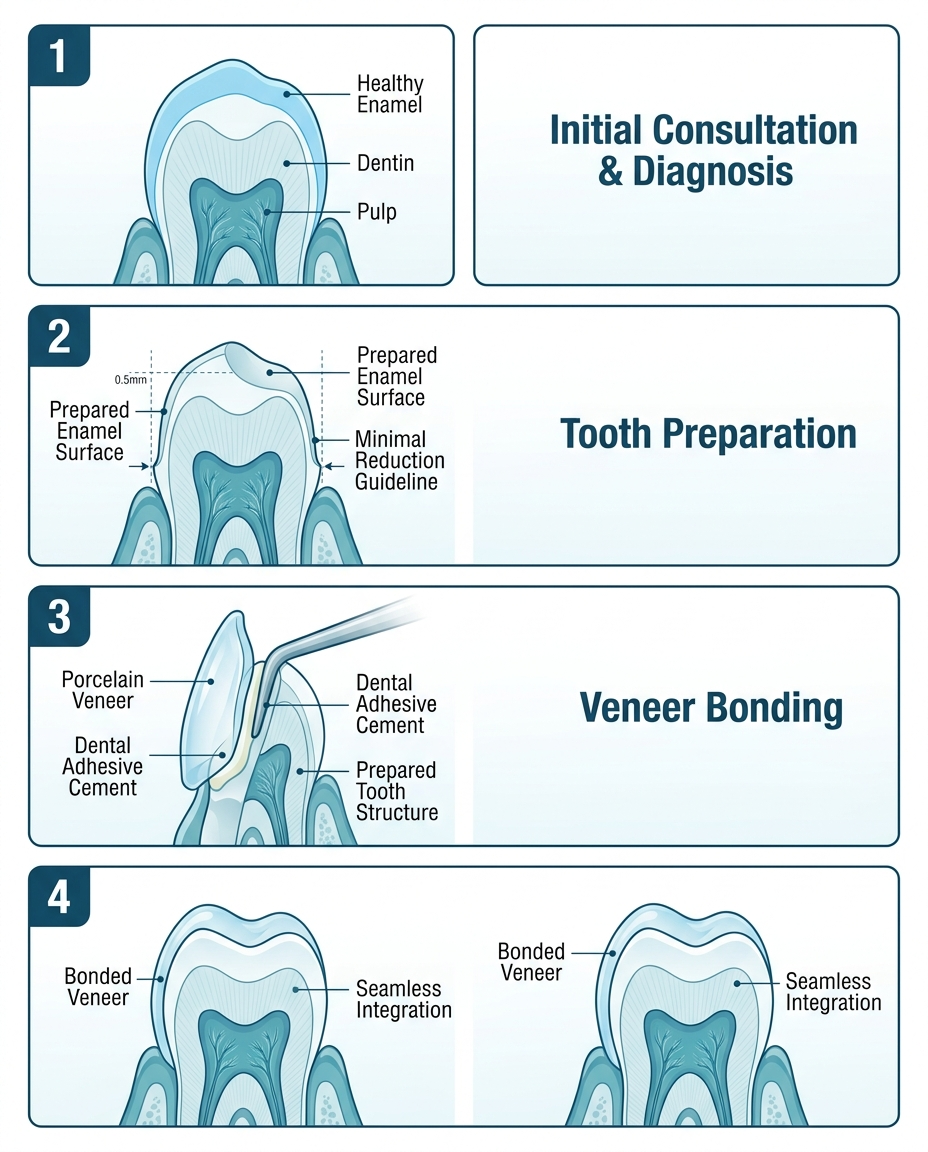
The preparation process for teeth under veneers is precise and conservative. Before veneers can be placed, your cosmetic dentist must prepare the front surface of your teeth to create space for the thin porcelain shells. This preparation typically involves removing about 0.5 to 0.7 millimeters of enamel from the front and sides of each tooth, roughly the thickness of a fingernail.
This minimal enamel removal serves several important purposes. First, it creates room for the veneer without making your teeth look bulky or unnatural. Second, it provides a slightly roughened surface that helps the veneer bond more securely to your natural tooth. Third, it allows the dentist to correct minor alignment issues and create the ideal tooth shape.
The amount of enamel removed depends on several factors, including the current condition of your teeth, the type of veneers being used, and the desired final result. Some ultra-thin veneers, often called minimal-prep or no-prep veneers, require even less tooth reduction, sometimes as little as 0.3 millimeters. However, these are not suitable for everyone and work best on teeth that are already well-aligned.
According to peer-reviewed research on veneer longevity, properly prepared teeth under veneers maintain their structural integrity and show no increased risk of decay when patients follow good oral hygiene practices. The key is working with an experienced cosmetic dentist who understands conservative preparation techniques.
🔬 DO TEETH UNDER VENEERS STAY HEALTHY?
Yes, teeth under veneers can remain perfectly healthy for decades with proper care. The veneer itself acts as a protective barrier, shielding the prepared tooth surface from bacteria, acids, and staining. However, it is important to understand that your natural teeth are still living structures that require ongoing maintenance.

The most vulnerable area for teeth under veneers is the margin where the veneer meets your natural tooth, typically at the gum line. This junction is where bacteria can potentially accumulate if proper oral hygiene is not maintained. That is why daily brushing and flossing are absolutely essential for veneer longevity.
The American Dental Association emphasizes that veneers do not make your teeth immune to cavities or gum disease. While the porcelain surface itself cannot decay, the exposed tooth structure at the margins and the tooth beneath the veneer can still develop cavities if bacteria are allowed to accumulate.
Regular dental checkups every six months are crucial for monitoring the health of your natural teeth. During these visits, your dentist can detect any early signs of decay or gum recession around the veneer margins and address issues before they become serious problems. Professional cleanings also remove plaque and tartar that regular brushing might miss.
Another important factor in keeping your natural teeth healthy is avoiding habits that can damage veneers. Avoid chewing on hard objects like ice, pens, or fingernails. Do not use your teeth as tools to open packages. If you grind your teeth at night, wearing a custom nightguard protects both your veneers and the teeth beneath them from excessive wear.
⚠️ CAN TEETH UNDER VENEERS GET CAVITIES?
This is one of the most common concerns patients have, and the honest answer is yes, teeth under veneers can develop cavities, but it is relatively uncommon when you practice good oral hygiene. The veneer covers the front surface of your tooth, but the back surface, sides, and margins are still exposed to your oral environment.
Cavities typically form at the gum line where the veneer edge meets your natural tooth, or on the back (lingual) surface of the tooth that remains uncovered. These areas are susceptible to decay if plaque and bacteria are allowed to accumulate. The good news is that these cavities are preventable with consistent oral care.
Before veneers are placed, your dentist ensures that all existing decay is removed and any cavities are filled. Starting with healthy, decay-free teeth is essential for long-term success. If decay is present before veneer placement, it will only worsen over time and potentially compromise the veneer bond.
If a cavity does develop on a tooth with a veneer, treatment options depend on the location and severity of the decay. Small cavities at the margins can sometimes be filled without removing the veneer. However, larger cavities or decay beneath the veneer may require removing and replacing the veneer after treating the decay. This is why prevention through excellent oral hygiene is so important.
💪 DO VENEERS WEAKEN YOUR NATURAL TEETH?
A common misconception is that removing enamel for veneer placement significantly weakens your teeth. While it is true that enamel is your tooth’s strongest layer, the minimal amount removed for veneers (typically less than one millimeter) does not substantially compromise tooth strength when the veneer is properly bonded.
In fact, once the porcelain veneer is bonded to your prepared tooth, it actually reinforces the tooth structure. Modern dental bonding materials create an incredibly strong connection between the veneer and your natural tooth. This bond is so strong that the veneer and tooth function as a single unit, often making the tooth more resistant to fracture than it was before.
Studies have shown that properly placed veneers can last 10 to 20 years or more with appropriate care. This longevity demonstrates that the prepared tooth remains structurally sound for decades. The key factors in maintaining tooth strength include conservative preparation, high-quality bonding materials, and avoiding excessive forces on the veneers.
It is worth noting that teeth with veneers are not invincible. They can still chip or crack if subjected to trauma or excessive force. However, this is true of natural teeth as well. The veneer preparation itself does not make your teeth more fragile. What matters most is how you care for them after placement.
🌟 WHAT ABOUT SENSITIVITY AFTER VENEER PLACEMENT?
Some patients experience temporary tooth sensitivity after veneer placement, and this is completely normal. When enamel is removed during preparation, the underlying dentin layer becomes closer to the tooth’s nerve. This can cause sensitivity to hot, cold, or sweet foods and beverages for a few days to a few weeks after the procedure.
The good news is that this sensitivity typically resolves on its own as your teeth adjust to the veneers. The bonding process seals the prepared tooth surface, which helps reduce sensitivity over time. Using a toothpaste designed for sensitive teeth can help manage any discomfort during the adjustment period.
In rare cases, sensitivity persists or worsens. This could indicate an issue with the veneer fit, the bonding process, or possibly inflammation of the tooth’s nerve. If you experience prolonged or severe sensitivity, contact your dentist immediately. Most sensitivity issues can be resolved with minor adjustments or additional treatments.
At TruSmile Now, we take extra care to minimize sensitivity during and after veneer placement. Our team uses advanced techniques and materials to ensure your comfort throughout the process. We also provide detailed aftercare instructions to help you manage any temporary sensitivity at home.
🔄 CAN VENEERS BE REMOVED OR REPLACED?
Because a thin layer of enamel is removed during preparation, veneers are generally considered a permanent treatment. Once your natural tooth structure has been altered, you will always need some type of restoration covering that tooth. However, veneers themselves can certainly be removed and replaced when necessary.
Veneers may need replacement for several reasons. They can chip, crack, or become discolored over many years of use. The bonding material can weaken over time, causing a veneer to become loose. Gum recession can expose the veneer margins, creating an aesthetic concern. In these situations, your dentist can safely remove the old veneer and replace it with a new one.
The removal process involves carefully breaking the bond between the veneer and your tooth, then gently removing the porcelain shell. Your natural tooth structure beneath remains intact. After removal, your dentist will evaluate the tooth, make any necessary repairs, and prepare it for a new veneer. In most cases, minimal additional tooth preparation is needed.
Some patients wonder if they can simply have veneers removed and go back to their natural teeth. While technically possible, this is rarely a good option because the prepared tooth surface is no longer protected by its full enamel layer. Without a veneer or other restoration, the tooth would be more vulnerable to sensitivity, staining, and decay. Most dentists recommend replacing old veneers rather than leaving prepared teeth unrestored.
💰 HOW MUCH DO VENEERS COST AT TRUSMILE NOW?
The cost of porcelain veneers varies depending on several factors, including the number of teeth being treated, the type of material used, and the complexity of your case. At TruSmile Now, we believe in transparent pricing and helping patients find affordable solutions for their smile goals.
We offer flexible payment plans through Cherry to make treatment affordable. Many patients choose to finance their veneers over time, making monthly payments that fit comfortably within their budget. We also work with most major dental insurance providers, though cosmetic procedures like veneers are typically not covered by insurance.
Our New Patient Special is just $49 and includes a comprehensive exam, X-rays, and consultation. During your consultation, Dr. Hanna Choi will evaluate your teeth, discuss your smile goals, and provide a detailed treatment plan with transparent pricing. We will also review all available financing options to help you achieve the smile you have always wanted.
One advantage of choosing TruSmile Now is our state-of-the-art in-house dental lab. This allows us to create your custom veneers right here in our facility, often reducing treatment time and costs compared to practices that send lab work out to third parties. You also benefit from better quality control and more precise color matching.
✅ HOW TO CARE FOR TEETH UNDER VENEERS
Maintaining healthy teeth under veneers requires the same basic oral hygiene practices you should already be following, with a few additional considerations. The goal is to keep both your veneers and your natural teeth in excellent condition for as long as possible.
Brush twice daily with a non-abrasive fluoride toothpaste and a soft-bristled toothbrush. Pay special attention to the gum line where your veneers meet your natural teeth. This is the most vulnerable area for plaque accumulation and potential decay. Gentle circular motions work better than aggressive scrubbing, which can damage both your gums and veneer margins.
Floss every single day without exception. Flossing removes plaque and food particles from between your teeth and along the gum line, areas your toothbrush cannot reach. Use a gentle sawing motion to slide the floss between your teeth, then curve it around each tooth and move it up and down beneath the gum line. Be careful not to snap the floss against your veneers.
Consider using an antimicrobial mouthwash to reduce bacteria in your mouth. Rinsing with mouthwash once or twice daily provides an extra layer of protection against decay and gum disease. Choose an alcohol-free formula if you experience dry mouth, as alcohol can be drying and potentially irritating.
Visit your dentist every six months for professional cleanings and examinations. These regular checkups allow your dental team to monitor the condition of your veneers and the health of your natural teeth. Professional cleanings remove hardened plaque (tartar) that you cannot remove at home, helping prevent decay and gum disease around your veneer margins.
The National Institute of Dental and Craniofacial Research emphasizes that good oral hygiene is essential for maintaining all types of dental restorations, including veneers. Consistent daily care is the best investment you can make in your smile’s longevity.
❓ FREQUENTLY ASKED QUESTIONS
Do teeth under veneers rot or decay faster than normal teeth?
No, teeth under veneers do not decay faster than normal teeth when proper oral hygiene is maintained. The veneer actually protects the front surface of your tooth from bacteria and acids. However, the exposed areas at the margins and the back of the tooth still require daily brushing and flossing to prevent cavities. With good care, your natural teeth can remain healthy for decades beneath your veneers.
Can you get cavities on teeth under veneers?
Yes, it is possible to develop cavities on teeth with veneers, but this is uncommon with proper oral care. Cavities typically form at the gum line where the veneer meets your natural tooth, or on the back surface of the tooth that is not covered by the veneer. Regular brushing, flossing, and dental checkups significantly reduce your risk of decay.
How much tooth structure is removed for veneers?
Traditional porcelain veneers require removing approximately 0.5 to 0.7 millimeters of enamel from the front surface of your teeth. This is roughly the thickness of a fingernail. Some ultra-thin or minimal-prep veneers require even less tooth reduction, sometimes as little as 0.3 millimeters. Your dentist will remove only the minimum amount necessary to achieve optimal results.
What happens if a veneer falls off?
If a veneer falls off, contact your dentist immediately. Keep the veneer in a safe place and avoid chewing on the affected tooth. The prepared tooth beneath will be sensitive and vulnerable without its protective covering. In many cases, your dentist can clean and re-bond the same veneer if it is undamaged. Do not attempt to reattach it yourself with household adhesives.
Are veneers better than crowns for protecting teeth?
Veneers and crowns serve different purposes. Veneers are primarily cosmetic and cover only the front surface of your tooth, requiring minimal tooth reduction. Crowns cover the entire tooth and provide more structural support, making them better for teeth that are severely damaged or weakened. Your dentist will recommend the best option based on your specific needs and the condition of your teeth.
How long do teeth under veneers last?
Your natural teeth under veneers can last a lifetime with proper care. The veneers themselves typically last 10 to 20 years before needing replacement due to normal wear or cosmetic concerns. However, your natural tooth structure beneath remains viable indefinitely. When veneers do need replacement, the same tooth can be restored with a new veneer as long as it remains healthy and structurally sound.
📍 VISIT TRUSMILE NOW – 3 ARIZONA LOCATIONS

TruSmile Now Peoria
20542 N Lake Pleasant Rd, Suite 113
Peoria, AZ 85382
Phone: (602) 362-0447
Hours: Mon-Thu 9:00 AM – 5:00 PM
TruSmile Now Chandler
2900 W Ray Rd #3
Chandler, AZ 85224
Phone: (480) 393-0687
Hours: Mon-Thu 9:00 AM – 5:00 PM
TruSmile Now Ahwatukee (Phoenix)
4530 E Ray Rd #170
Phoenix, AZ 85044
Phone: (480) 360-4754
Hours: Mon 9-5, Tue 7am-2pm, Wed-Thu 10-7, Fri 8-3, Sat 8am-1pm
Serving Peoria, Chandler, Ahwatukee, Phoenix, Tempe, Mesa, Gilbert, Scottsdale, Glendale, Surprise, and the Greater Phoenix metro area.
New Patient Special: $49 – Includes exam, X-rays, and consultation!
We accept most major insurance including Delta Dental, Cigna, UnitedHealthcare, MetLife, Aetna, BCBS, and more. Medicare Part B accepted for medically necessary treatments.
We offer flexible payment plans through Cherry to make your treatment affordable.
Prefer texting over calling? Lucy, our AI-powered assistant, is always ready to chat. Ask her anything about our services or schedule your visit in seconds.
Ready to learn more about teeth under veneers and whether veneers are right for you? Call any of our locations or schedule online today!
View our before and after gallery to see real patient results!