If you are exploring tooth replacement options, you have probably heard about screwless dental implants, also known as mini dental implants or one-piece implants. These innovative solutions offer a less invasive alternative to traditional implants, often at a lower cost. But exactly how much do screwless dental implants cost, and are they the right choice for your smile? Understanding the pricing structure, benefits, and long-term value can help you make an informed decision about your dental health.
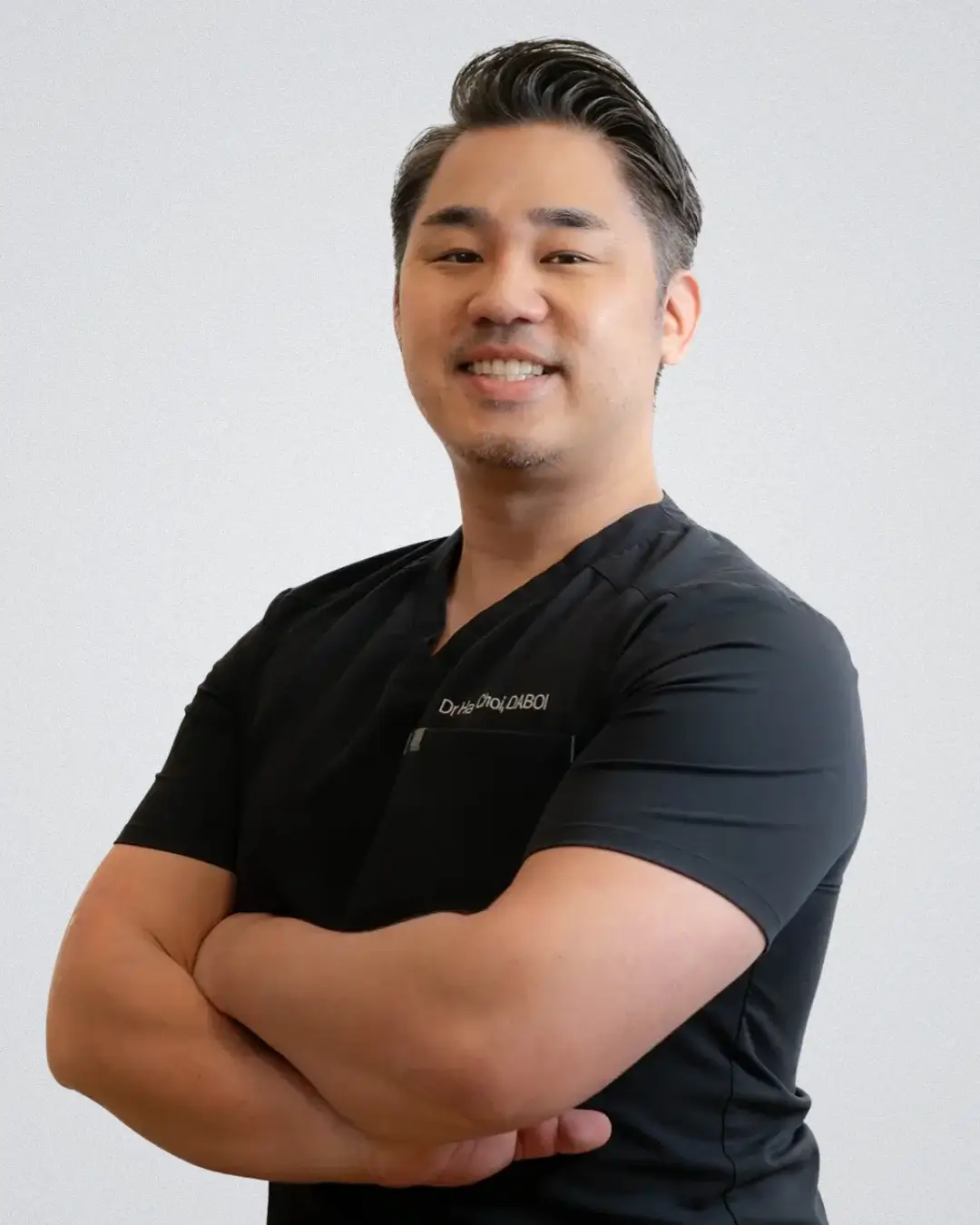
At TruSmile Now, Dr. Han Choi, DDS, DABOI, FAAID, has helped hundreds of patients achieve permanent, beautiful smiles. As a Diplomate of the American Board of Oral Implantology and Fellow of the American Academy of Implant Dentistry, Dr. Han Choi is a board-certified implant specialist who handles the most complex cases, including All-on-4 and full-arch restorations. With experience managing 10 clinics and training over 30 dentists, his expertise is unmatched in the Phoenix metro area.
💰 WHAT ARE SCREWLESS DENTAL IMPLANTS?
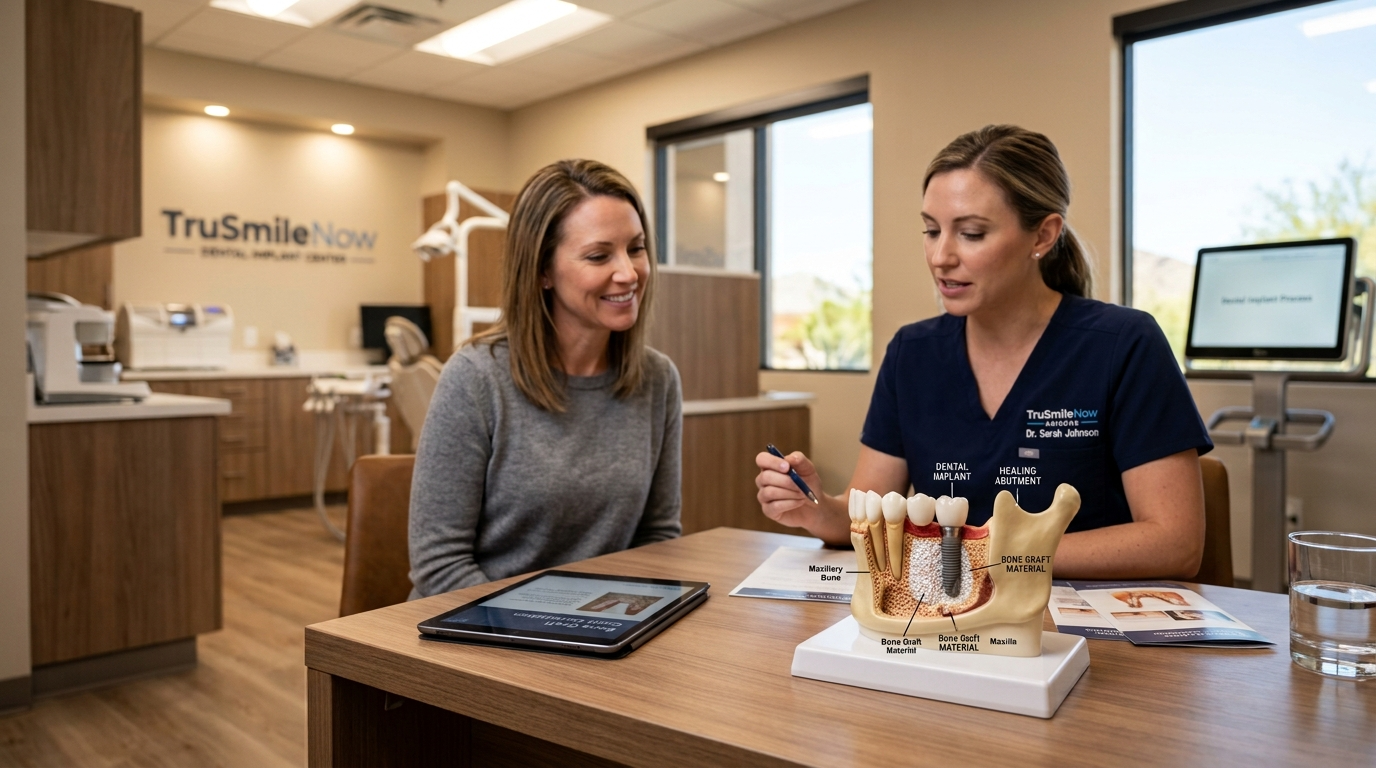
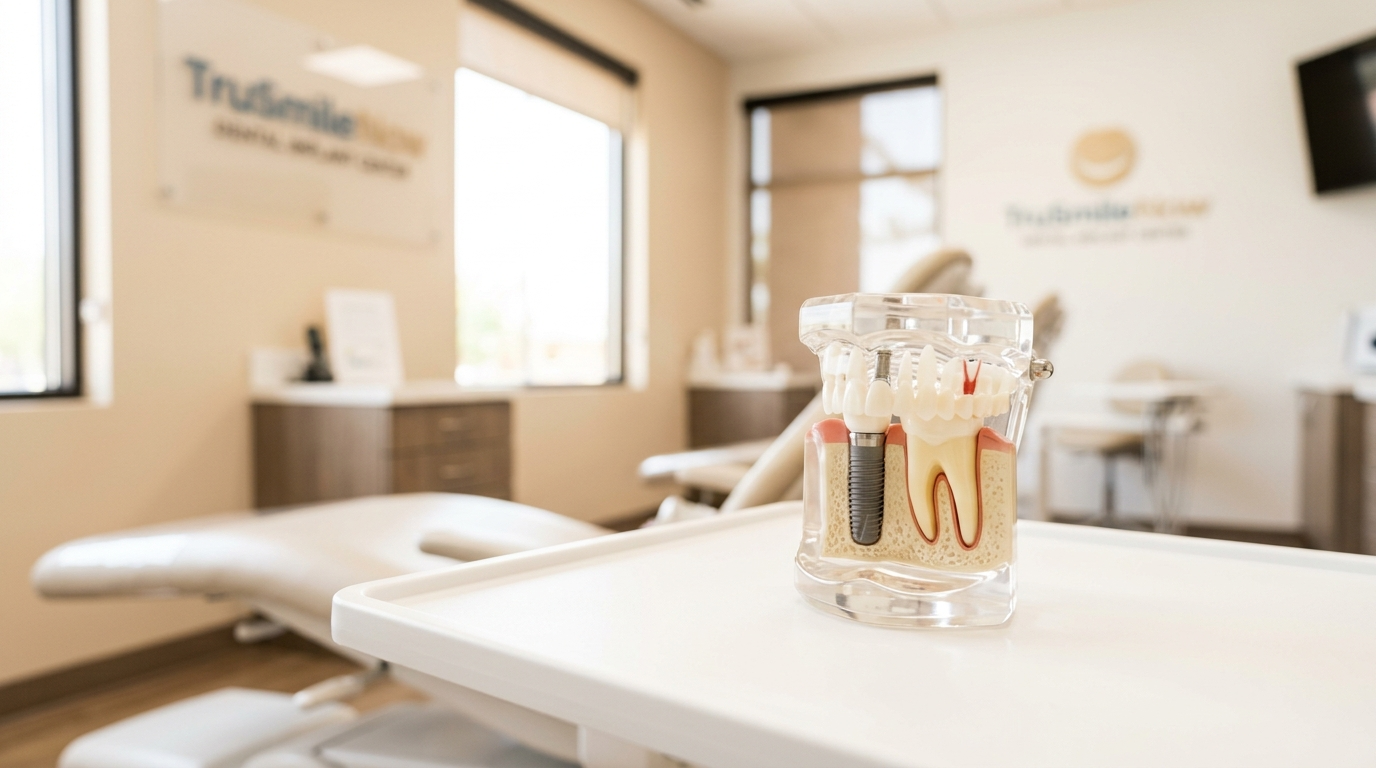
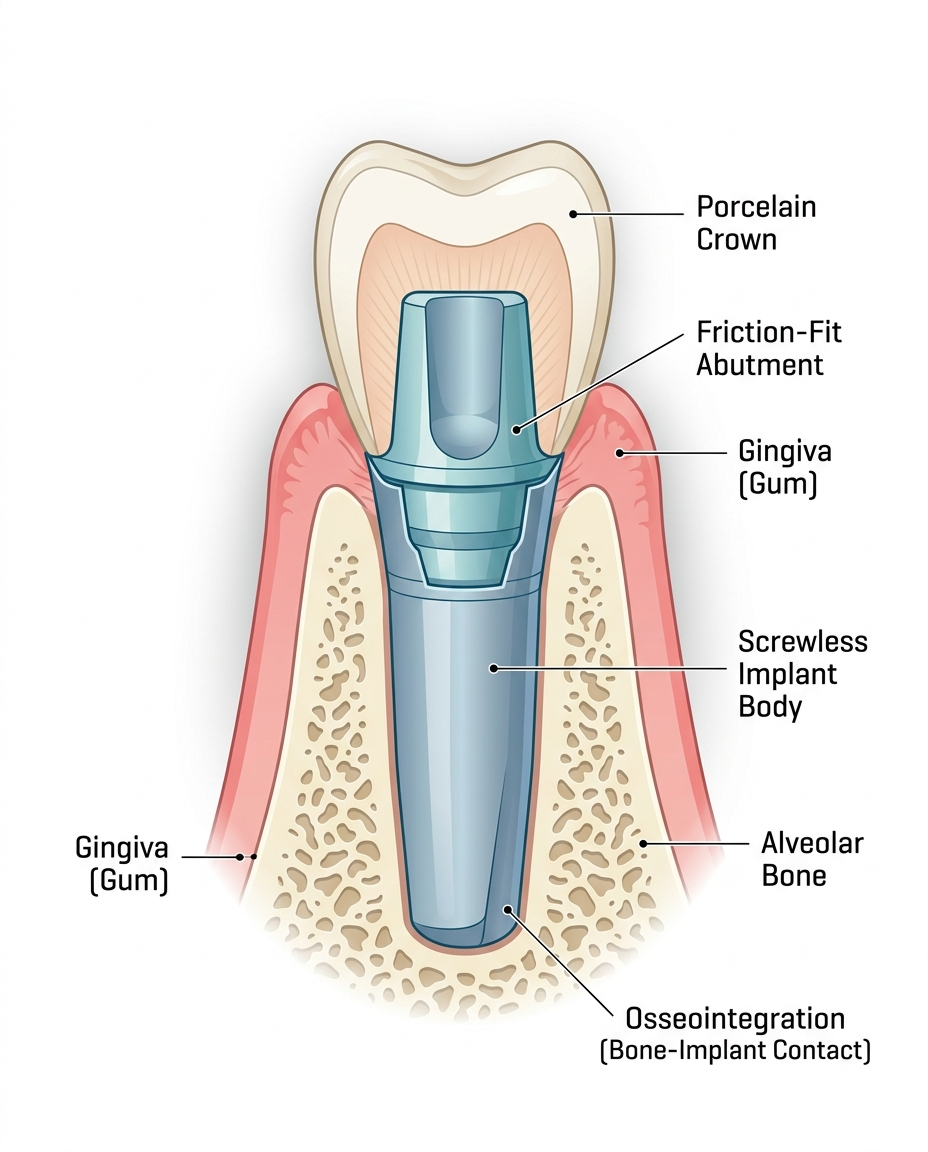
Screwless dental implants, commonly referred to as mini dental implants or one-piece implants, are a streamlined alternative to traditional two-piece implant systems. Unlike conventional implants that require a separate abutment to be screwed onto the implant post, these implants feature a single integrated design where the post and abutment are manufactured as one continuous piece.
This design offers several advantages. The smaller diameter (typically 1.8mm to 3mm compared to 3.5mm to 6mm for traditional implants) means the placement procedure is less invasive, often requiring no incisions or sutures. Many patients can have screwless dental implants placed in a single appointment with minimal discomfort and faster healing times.
According to peer-reviewed research on implant survival rates, mini implants have shown success rates between 90-94% over five years when used appropriately. They work particularly well for stabilizing dentures, replacing small teeth like lower incisors, or for patients with limited bone density who want to avoid bone grafting procedures.
💵 AVERAGE COST OF SCREWLESS DENTAL IMPLANTS
The cost of screwless dental implants varies significantly based on several factors, but they are generally more affordable than traditional implant systems. On average, you can expect to pay $500 to $1,500 per mini implant, compared to $3,000 to $5,000 for a traditional dental implant with crown.
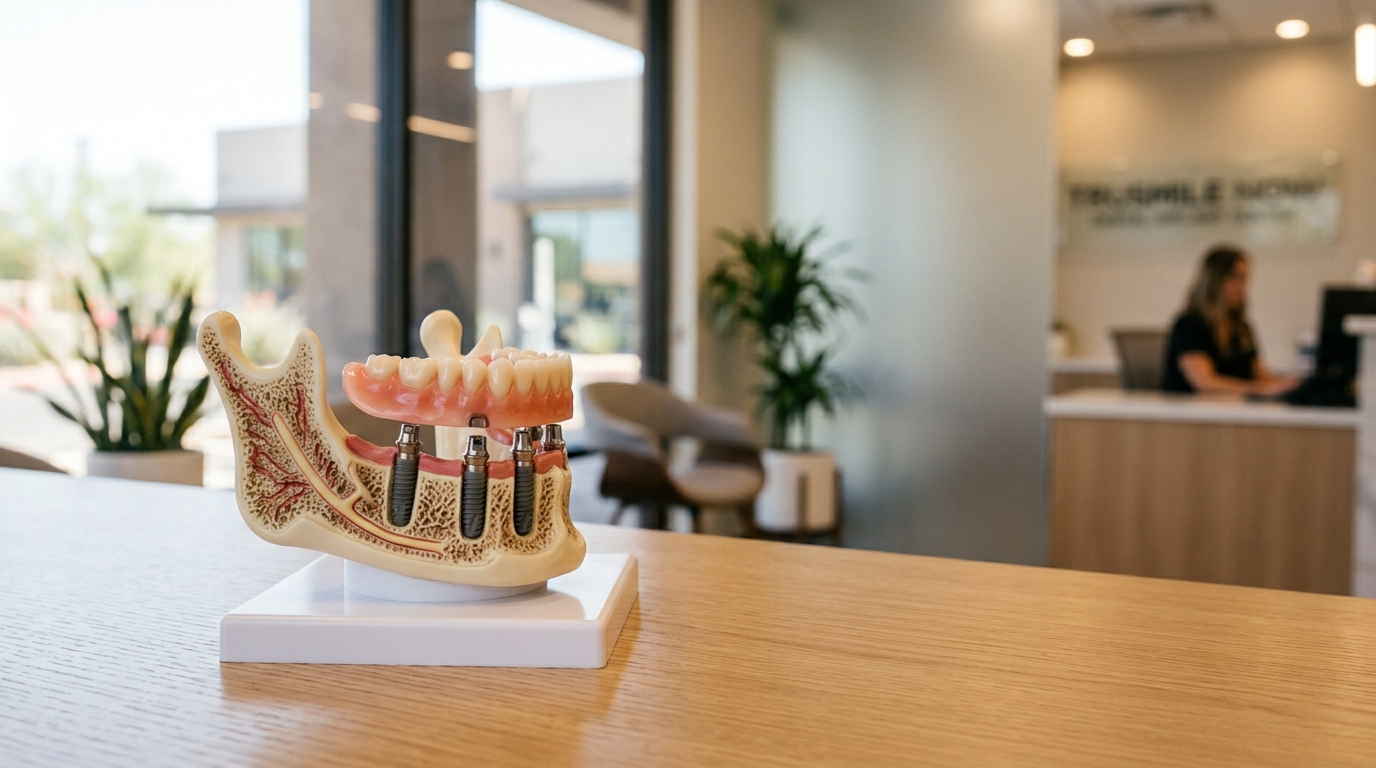
At TruSmile Now, our pricing reflects our commitment to transparency and affordability. Single implant treatment starts at $2,699, and we offer specialized packages for full-arch restoration. For patients looking to stabilize existing dentures, our Snap-on Dentures with 2 Implants start at $3,999, while our Snap-on Dentures with 4 Implants start at $7,999.
The lower cost of these implants stems from several factors. The simplified one-piece design reduces manufacturing complexity. The minimally invasive placement procedure typically requires less chair time and fewer follow-up appointments. Most importantly, many patients can avoid costly bone grafting procedures because the smaller diameter implants can be placed in areas with less bone volume.
We offer flexible payment plans through Cherry to make treatment affordable for every budget. Our New Patient Special is just $49 and includes a comprehensive exam, X-rays, and consultation where we can provide you with an exact cost estimate based on your specific needs.

📊 FACTORS THAT AFFECT THE COST
Several variables influence the final price you will pay for this treatment. Understanding these factors helps you anticipate costs and make informed decisions about your care.
Number of Implants Needed
The most obvious cost factor is how many implants you need. A single tooth replacement requires one implant, while stabilizing a full denture might require two to four implants per arch. Full-mouth restoration using mini implants can involve 8 to 12 implants total, though this is less common than using traditional implants for full-arch cases.
Geographic Location
Dental costs vary by region. In Arizona, particularly in the Phoenix metro area including Peoria, Chandler, and Ahwatukee, prices tend to be more competitive than in major metropolitan areas like New York or Los Angeles. At TruSmile Now, we leverage our state-of-the-art in-house dental lab to control costs without compromising quality.
Diagnostic Imaging and Planning
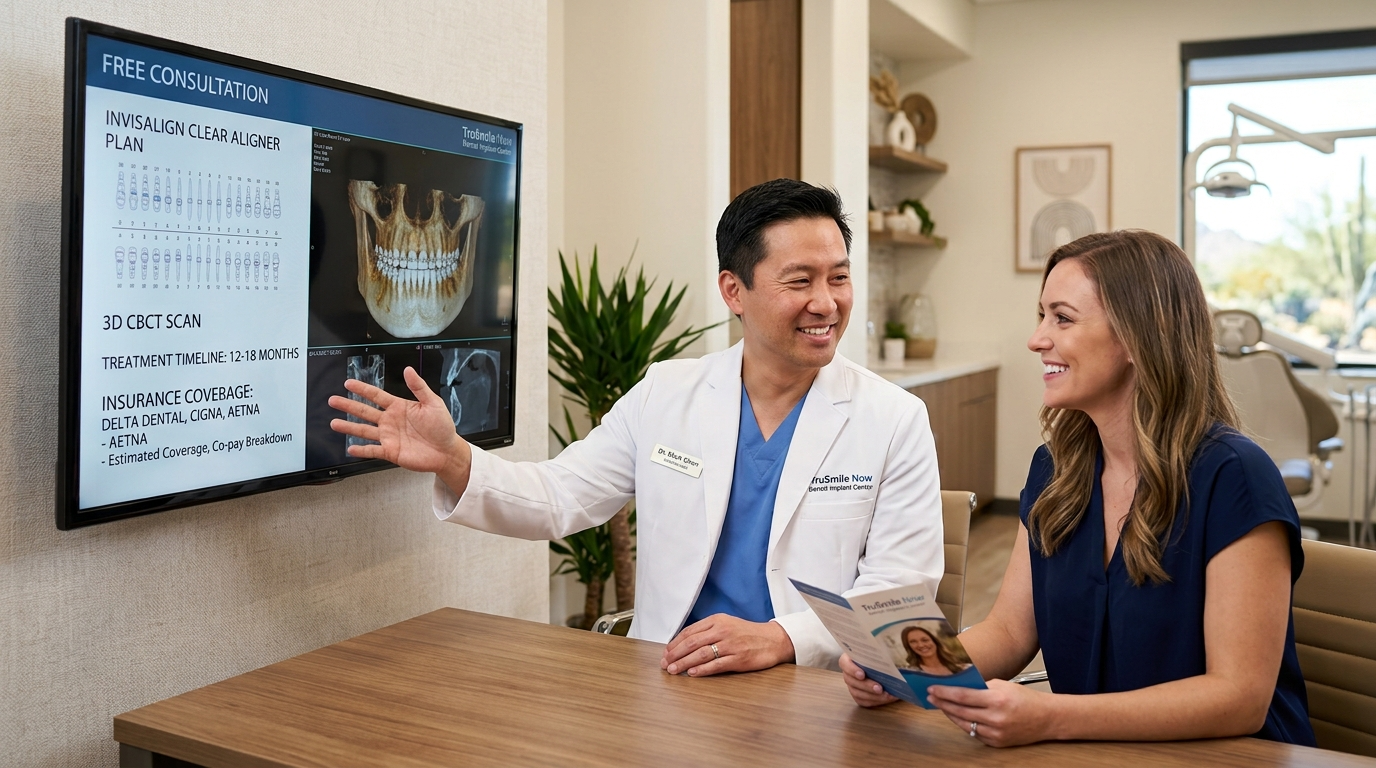
Proper implant placement requires detailed imaging. We include a free 3D Cone Beam CT scan with your consultation, which provides precise measurements of your bone structure and helps Dr. Han Choi plan optimal implant positioning. This advanced technology, which other practices may charge $300-$500 for separately, is included in our comprehensive treatment planning.
Type of Restoration
What attaches to your implants affects total cost. Individual crowns, bridges, or denture attachments all have different price points. Denture stabilization using mini implants with ball-and-socket attachments is one of the most cost-effective applications of this technology.
Additional Procedures
While one advantage of these implants is often avoiding bone grafting, some patients may still require extractions, site preparation, or treatment for gum disease before implant placement. These preparatory procedures add to the overall investment but are essential for long-term success.
⚖️ COMPARING MINI IMPLANTS TO TRADITIONAL IMPLANTS
When considering whether to choose mini or traditional implants, cost is just one factor. Each system has distinct advantages depending on your clinical situation.
Cost Comparison: Mini implants typically cost 50-70% less than traditional implants. For a single tooth, you might pay $500-$1,500 for a mini implant versus $3,000-$5,000 for a traditional implant with crown. For denture stabilization, four mini implants might cost $2,000-$6,000 compared to $8,000-$15,000 for two traditional implants.
Treatment Time: Mini implants can often be placed and loaded with a restoration on the same day. Traditional implants typically require 3-6 months of healing before the final restoration is attached. This faster timeline means fewer appointments and less time away from work.
Invasiveness: The smaller diameter means mini implant placement is less traumatic to surrounding tissues. Most procedures require no incisions or sutures, and patients report minimal discomfort. Traditional implants require surgical flap elevation and more extensive healing.
Strength and Durability: Traditional implants can withstand greater forces and are preferred for single-tooth replacement of molars and premolars. The American Dental Association notes that while mini implants are excellent for specific applications like denture retention and small tooth replacement, traditional implants remain the gold standard for most single-tooth replacements.
Best Applications: Mini implants excel at stabilizing loose dentures, replacing lower front teeth, serving as temporary anchors during orthodontics, and providing solutions for patients with insufficient bone who want to avoid grafting. Traditional implants are better for replacing molars, supporting fixed bridges, and full-arch restorations requiring maximum strength.
🔍 HOW THE PROCEDURE WORKS
Understanding the placement process helps explain why these implants are more affordable and accessible than traditional systems.
Initial Consultation and Planning
Your journey begins with a comprehensive evaluation. Dr. Han Choi will examine your oral health, take detailed 3D images using our Cone Beam CT scanner, and discuss your goals. This appointment determines whether you are a good candidate for mini implants and how many you will need.
Implant Placement
On the day of your procedure, the area is numbed with local anesthetic. Using a specialized drill smaller than those used for traditional implants, Dr. Han Choi creates a pilot hole in the jawbone. The one-piece implant is then gently threaded into place, much like a screw going into wood. Because the implant diameter is small and the technique is minimally invasive, most patients experience very little discomfort.
Immediate Loading
One of the biggest advantages is immediate loading capability. In many cases, your denture or temporary crown can be attached the same day. The implant head, which is already part of the one-piece design, accepts the restoration attachment without waiting for osseointegration (bone healing) to complete.
Healing and Follow-up
Over the next 3-6 months, the implant fuses with your jawbone through osseointegration. You will have follow-up appointments to ensure proper healing and make any necessary adjustments to your restoration. Most patients return to normal activities within 24-48 hours.
✅ BENEFITS OF CHOOSING MINI IMPLANTS
Beyond cost savings, mini implants offer several compelling advantages that make them an attractive option for many patients.
Less Invasive Surgery: The small diameter means minimal trauma to your gums and bone. Most procedures require no incisions or sutures, reducing post-operative discomfort and infection risk. Patients who are anxious about dental surgery often find this approach much more tolerable.
Faster Recovery: With less surgical trauma comes faster healing. Most patients experience minimal swelling and can return to work the next day. Compare this to traditional implants, where recovery might take several days and require pain medication.
No Bone Grafting in Many Cases: Because these implants are narrower, they can often be placed in areas where traditional implants would require bone grafting first. This eliminates months of additional healing time and several thousand dollars in additional costs.
Same-Day Results: Walking out of your appointment with functional teeth is life-changing. Whether stabilizing a loose denture or replacing a missing front tooth, immediate loading means you do not have to go months with gaps in your smile or struggling with ill-fitting temporaries.
Ideal for Seniors: Older patients who may not be candidates for extensive surgery due to medical conditions often qualify for mini implant treatment. The shorter procedure time and reduced surgical stress make this option accessible to patients who might otherwise be told they cannot have implants.
Excellent for Denture Stabilization: If you currently wear dentures that slip, click, or require messy adhesives, just two to four mini implants can transform your experience. Patients report being able to eat confidently, speak clearly, and smile without worry about their dentures moving.
💳 INSURANCE AND FINANCING OPTIONS
One of the most common questions patients ask is whether insurance covers this treatment. The answer depends on your specific plan and the reason for treatment.
Many dental insurance plans provide partial coverage for implants, typically 50% of the cost up to the plan’s annual maximum. However, coverage varies significantly. Some plans classify mini implants as a cosmetic procedure and provide no benefits, while others treat them the same as traditional implants.
At TruSmile Now, we accept most major insurance plans including Delta Dental, Cigna, UnitedHealthcare, MetLife, Aetna, Guardian, Blue Cross Blue Shield of Arizona, Anthem BCBS, and many others. Our experienced billing team will verify your benefits and help you understand exactly what your plan covers before you commit to treatment.
We also accept Medicare Part B for medically necessary treatments. While Medicare typically does not cover routine dental care, certain implant procedures may qualify for coverage if they are deemed medically necessary, such as after facial trauma or cancer treatment.
For patients without insurance or those whose insurance does not fully cover treatment, we offer flexible payment plans through Cherry. These plans feature low monthly payments and various term options, making it possible to get the care you need without delaying treatment due to cost concerns.
🏥 WHY CHOOSE TRUSMILE NOW FOR YOUR IMPLANT TREATMENT
Choosing where to have your implant treatment is just as important as deciding which type of implant to get. TruSmile Now offers several unique advantages that set us apart from other dental practices in Arizona.
Board-Certified Implant Specialist: Dr. Han Choi holds credentials that fewer than 400 dentists in the United States have earned. His DABOI and FAAID certifications represent the highest level of training and expertise in implant dentistry. This means you are in the hands of a true specialist, not a general dentist who occasionally places implants.
State-of-the-Art In-House Lab: Our on-site dental laboratory is a game-changer. Rather than sending your crown, bridge, or denture to an outside lab and waiting weeks, we fabricate your restoration right here. This means faster turnaround times, better quality control, and the ability to make adjustments immediately if needed.
Advanced 3D Imaging: Every implant consultation includes a complimentary 3D Cone Beam CT scan. This technology provides detailed views of your bone structure, nerve locations, and sinus cavities, allowing for precise implant placement and reducing the risk of complications.
Comprehensive Team: With six experienced doctors covering all dental specialties under one roof, we can handle any situation that arises. Need a tooth extracted before implant placement? We do that. Require orthodontic treatment first? Dr. Jae Choi is our board-certified orthodontist. Want cosmetic enhancements? Dr. Wremaine Wilson specializes in veneers and smile design.
Same-Day Emergency Appointments: Dental emergencies do not wait for convenient times. We reserve appointment slots every day for urgent cases, ensuring you get the care you need when you need it.
Three Convenient Locations: Whether you live in Peoria, Chandler, Ahwatukee, or anywhere in the Phoenix metro area, we have a location near you. Each office is equipped with the same advanced technology and staffed by the same exceptional team.
❓ FREQUENTLY ASKED QUESTIONS
How long do screwless dental implants last?
With proper care and maintenance, mini implants can last 10-15 years or longer. While they may not have the same lifespan as larger traditional implants (which can last 20-25 years or more), they still provide excellent long-term value, especially considering their lower cost and less invasive placement. Success depends on factors like oral hygiene, bone quality, and the forces placed on the implants.
Are screwless dental implants as strong as traditional implants?
Mini implants are not as strong as traditional implants due to their smaller diameter. However, they are strong enough for their intended applications, such as stabilizing dentures, replacing small teeth, and providing temporary anchorage. For single-tooth replacement of molars or supporting fixed bridges, traditional implants are typically recommended because they can better withstand the higher chewing forces in these areas.
Does the placement procedure hurt?
Most patients report minimal discomfort during and after mini implant placement. The procedure is performed under local anesthesia, so you should not feel pain during treatment. Because the technique is minimally invasive with no incisions or sutures in most cases, post-operative discomfort is typically mild and manageable with over-the-counter pain relievers. Many patients describe the experience as easier than having a tooth extracted.
Can I eat normally after getting mini implants?
You will need to follow a soft food diet for the first few days after placement to allow initial healing. After about a week, most patients can return to their normal diet. If you are using mini implants to stabilize a denture, you will notice an immediate improvement in your ability to eat compared to wearing an unstabilized denture. However, avoid extremely hard or sticky foods that could place excessive stress on the implants, especially during the first few months of healing.
What is the success rate for mini implants?
Research shows that mini implants have success rates between 90-94% over five years when used appropriately. Success rates are highest when the implants are used for their ideal applications, such as denture stabilization. Factors that influence success include the quality and quantity of bone, oral hygiene practices, smoking status, and systemic health conditions like diabetes. Dr. Han Choi will evaluate your specific situation to determine if you are a good candidate.
How much do screwless dental implants cost for full denture stabilization?
At TruSmile Now, snap-on dentures with 2 mini implants start at $3,999, while snap-on dentures with 4 implants start at $7,999. These prices include the implants, surgery, and the denture attachments. The exact cost depends on whether you need new dentures made or if your existing dentures can be retrofitted. We provide detailed cost estimates during your consultation so there are no surprises.
📍 VISIT TRUSMILE NOW – 3 ARIZONA LOCATIONS
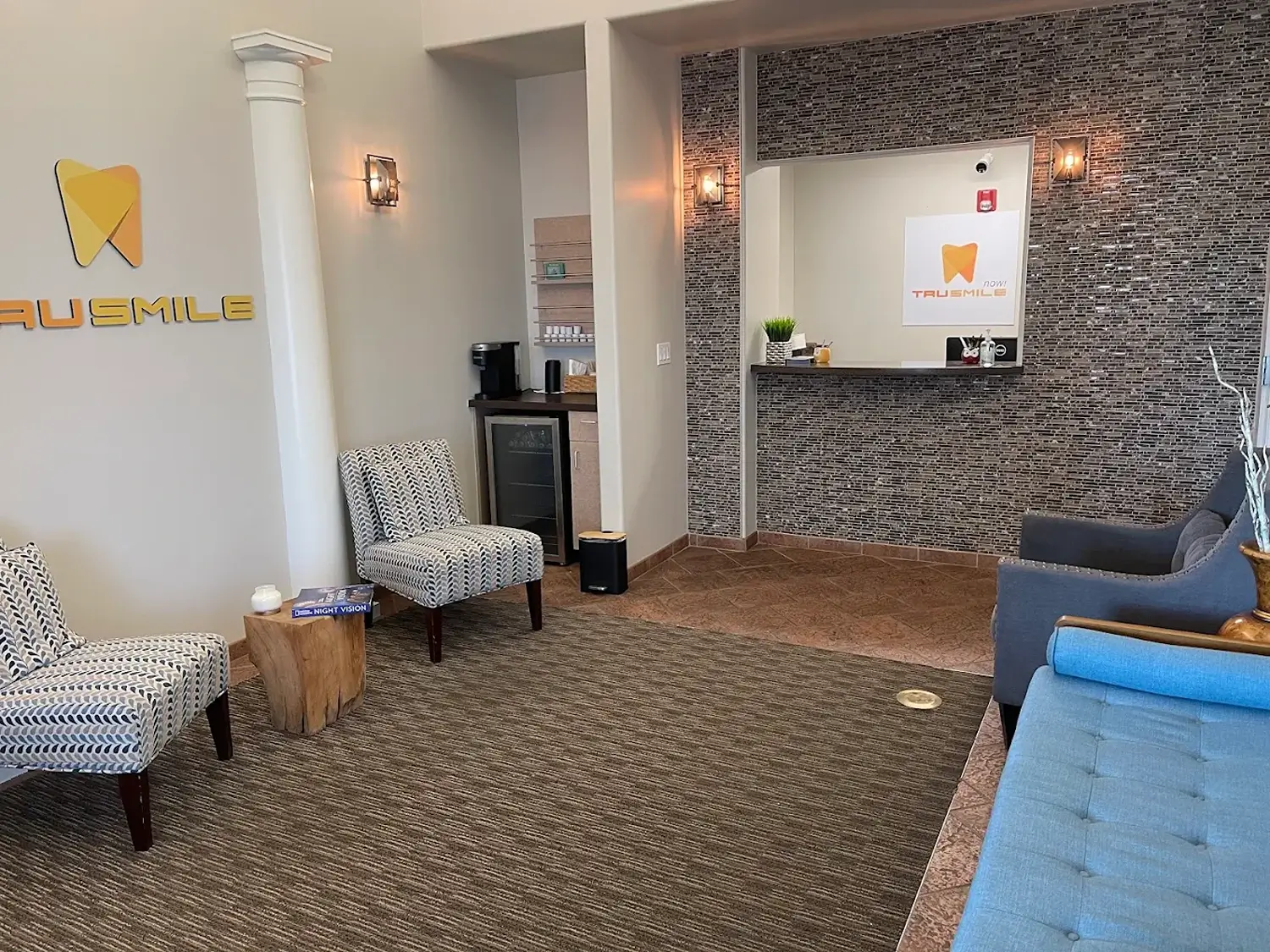
TruSmile Now Peoria
20542 N Lake Pleasant Rd, Suite 113
Peoria, AZ 85382
Phone: (602) 362-0447
Hours: Mon-Thu 9:00 AM – 5:00 PM
TruSmile Now Chandler
2900 W Ray Rd #3
Chandler, AZ 85224
Phone: (480) 393-0687
Hours: Mon-Thu 9:00 AM – 5:00 PM
TruSmile Now Ahwatukee (Phoenix)
4530 E Ray Rd #170
Phoenix, AZ 85044
Phone: (480) 360-4754
Hours: Mon 9-5, Tue 7am-2pm, Wed-Thu 10-7, Fri 8-3, Sat 8am-1pm
Serving Peoria, Chandler, Ahwatukee, Phoenix, Tempe, Mesa, Gilbert, Scottsdale, Glendale, Surprise, and the Greater Phoenix metro area.
New Patient Special: $49 – Includes exam, X-rays, and consultation!
We accept most major insurance including Delta Dental, Cigna, UnitedHealthcare, MetLife, Aetna, BCBS, and more. Medicare Part B accepted for medically necessary treatments.
We offer flexible payment plans through Cherry to make your treatment affordable.
Prefer texting over calling? Lucy, our AI-powered assistant, is always ready to chat. Ask her anything about our services or schedule your visit in seconds.
Ready for screwless dental implants? Call any of our locations or schedule online today!
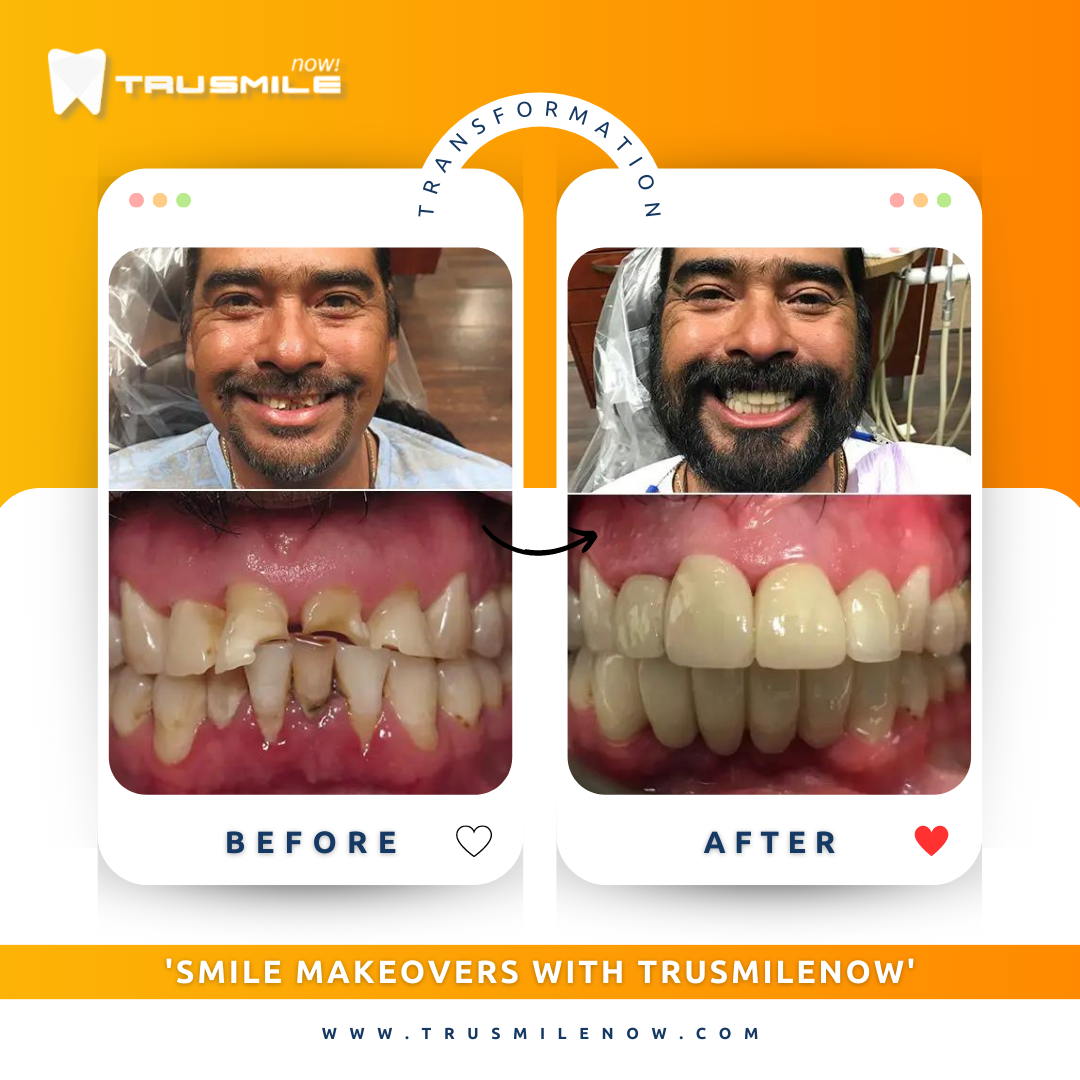
View our before and after gallery to see real patient results!