One of the most common questions patients ask before getting dental implants is whether they will be put to sleep during the procedure. The answer depends on several factors, including the complexity of your case, your anxiety level, and your personal preferences. Most patients receive some form of sedation during dental implant surgery, ranging from local anesthesia to general anesthesia. Understanding your dental implant sedation options can help you feel more confident and comfortable about your upcoming treatment.
At TruSmile Now, Dr. Han Choi, DDS, DABOI, FAAID, has helped hundreds of patients achieve permanent, beautiful smiles. As a Diplomate of the American Board of Oral Implantology and Fellow of the American Academy of Implant Dentistry, Dr. Han Choi is a board-certified implant specialist who handles the most complex cases, including All-on-4 and full-arch restorations. With experience managing 10 clinics and training over 30 dentists, his expertise is unmatched in the Phoenix metro area.

🦷 UNDERSTANDING DENTAL IMPLANT SEDATION OPTIONS
The type of dental implant sedation you receive depends on multiple factors. Your dentist will consider the number of implants being placed, whether bone grafting is needed, the length of the procedure, and your personal comfort level. According to the American Dental Association, dental implants are a safe and well-established treatment option, and modern sedation techniques make the experience comfortable for virtually all patients.
Most dental implant procedures are performed using one of four sedation levels: local anesthesia alone, nitrous oxide (laughing gas), oral conscious sedation, IV sedation, or general anesthesia. The choice depends on your specific situation and what will make you most comfortable during the procedure.
Local Anesthesia: The Standard Approach
For single implant placement in straightforward cases, local anesthesia is often sufficient. This involves numbing injections in the treatment area, similar to what you would receive for a filling. You remain fully awake and aware during the procedure, but you should not feel any pain. Many patients are surprised by how comfortable they feel with just local anesthesia, especially when placing one or two implants.
Local anesthesia is the most cost-effective option and allows for the fastest recovery. You can typically drive yourself home after the appointment and resume normal activities within a day or two. However, if you experience dental anxiety or need multiple implants placed, you may prefer a deeper level of sedation.
Nitrous Oxide: Mild Relaxation
Nitrous oxide, commonly called laughing gas, provides mild sedation while keeping you conscious and responsive. You inhale the gas through a small mask placed over your nose, and it helps you feel relaxed and less anxious during the procedure. Nitrous oxide is often combined with local anesthesia for patients who want to stay awake but need help managing nervousness.
The effects of nitrous oxide wear off quickly once the mask is removed, so you can usually drive yourself home after treatment. This makes it a popular choice for patients who want some anxiety relief without the deeper sedation of IV medications.
💊 CONSCIOUS SEDATION FOR DENTAL IMPLANTS
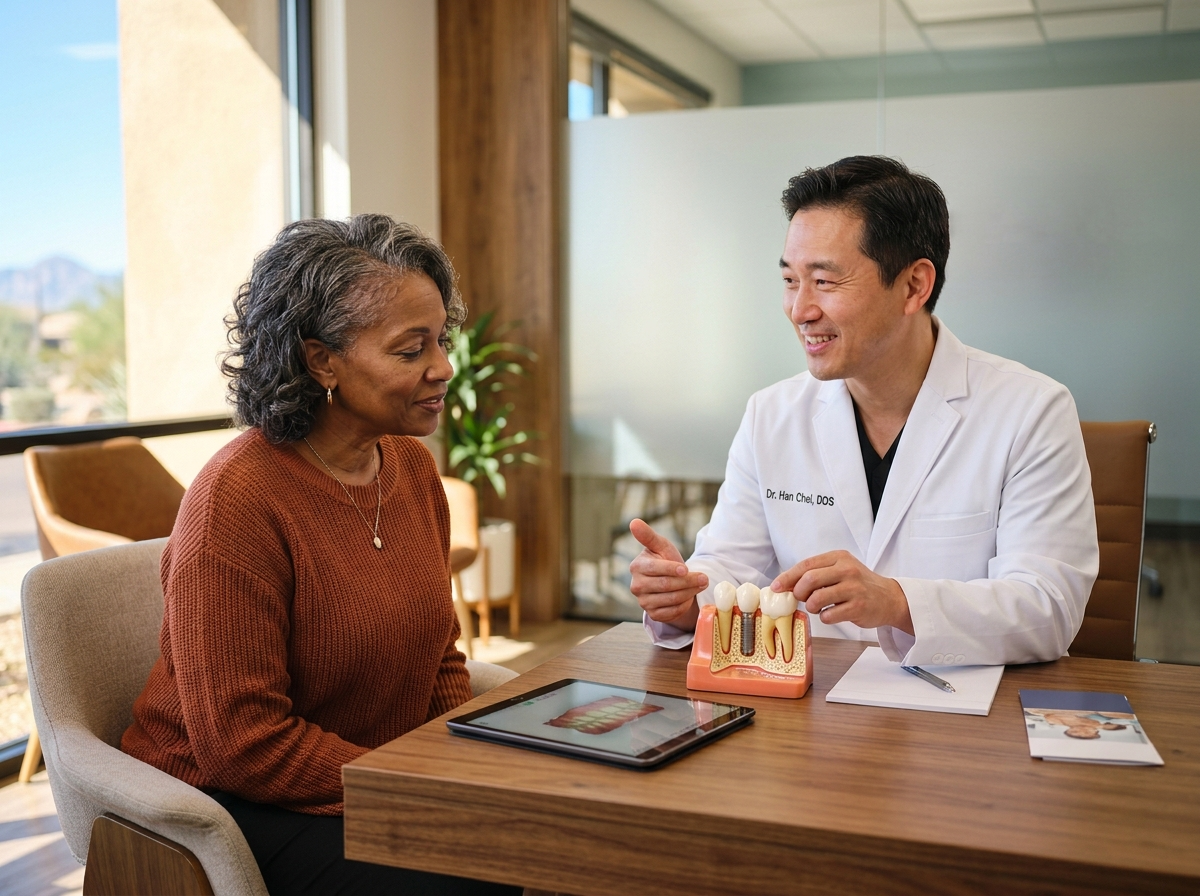
Conscious sedation, also known as twilight sedation, is one of the most popular forms of dental implant sedation. This can be administered orally (pill form) or intravenously (IV). With conscious sedation, you remain technically awake but in a deeply relaxed state. Most patients have little to no memory of the procedure afterward.
Oral Conscious Sedation
Oral conscious sedation involves taking a prescribed medication, typically about an hour before your appointment. The medication helps you feel drowsy and relaxed, though you will still be able to respond to questions and follow instructions. This type of sedation is ideal for patients with moderate anxiety who are having multiple implants placed.
Because the effects of oral sedation can last several hours, you will need someone to drive you to and from your appointment. Many patients appreciate that oral sedation allows them to remain somewhat aware while significantly reducing anxiety and discomfort.
IV Sedation: Deeper Relaxation
IV sedation provides a deeper level of relaxation than oral sedation. Medication is delivered directly into your bloodstream through a small needle in your arm or hand. The dentist can adjust the sedation level throughout the procedure to keep you comfortable. With IV sedation, you will be in a twilight state where you can still respond to verbal cues, but you will likely have little memory of the treatment afterward.
IV sedation is commonly used for complex cases such as All-on-4 dental implants, full-arch restorations, or procedures requiring bone grafting. According to peer-reviewed research on implant survival rates, proper sedation management contributes to better patient outcomes and higher satisfaction rates.
😴 GENERAL ANESTHESIA: COMPLETE SLEEP
General anesthesia is the deepest form of sedation, where you are completely unconscious during the procedure. This is the option most people think of when they ask, “Do they put you to sleep for dental implants?” While general anesthesia is not necessary for most implant cases, it may be recommended for certain situations.
General anesthesia is typically reserved for extensive procedures such as full-mouth reconstruction, cases requiring significant bone grafting, or patients with severe dental phobia or special needs. It requires the presence of an anesthesiologist or certified nurse anesthetist to monitor you throughout the procedure.
When Is General Anesthesia Recommended?
Your dentist may recommend general anesthesia if you are having multiple implants placed along with bone grafting, sinus lifts, or other complex surgical procedures. Patients with extreme dental anxiety, difficulty controlling movements, or certain medical conditions may also benefit from being completely asleep during treatment.
The advantage of general anesthesia is that you will have no awareness or memory of the procedure. However, it comes with higher costs, requires fasting before the appointment, and involves a longer recovery period. You will need someone to stay with you for at least 24 hours after the procedure.
✅ WHICH SEDATION OPTION IS RIGHT FOR YOU?
Choosing the right sedation method depends on several factors. Consider the complexity of your procedure, your level of anxiety, your medical history, and your budget. During your consultation at TruSmile Now, Dr. Han Choi will discuss your options and help you select the sedation level that best meets your needs.
For a single dental implant in a healthy patient with minimal anxiety, local anesthesia may be perfectly adequate. For patients receiving All-on-4 implants or multiple implants at once, IV sedation or general anesthesia provides a more comfortable experience. The goal is to ensure you feel safe, relaxed, and pain-free throughout your treatment.
Safety Considerations
All forms of sedation are safe when administered by trained professionals. At TruSmile Now, our team follows strict safety protocols and monitors your vital signs throughout the procedure. Before your appointment, you will receive detailed instructions about eating, drinking, and medication restrictions.
Be sure to inform your dentist about all medications you take, any allergies, and your complete medical history. Certain conditions such as sleep apnea, heart disease, or respiratory issues may affect which sedation options are safest for you.
💰 COST CONSIDERATIONS FOR SEDATION
The cost of sedation varies depending on the type you choose. Local anesthesia is typically included in the cost of your implant procedure. Nitrous oxide usually adds $75 to $200 to your total. Oral conscious sedation ranges from $200 to $400, while IV sedation can cost $500 to $1,000 or more. General anesthesia is the most expensive option, often adding $1,000 to $2,500 to your procedure cost.
At TruSmile Now, we offer flexible payment plans through Cherry to make treatment affordable. Many dental insurance plans cover at least a portion of implant costs, and some may help with sedation expenses, especially if it is deemed medically necessary. Our team will work with your insurance to maximize your benefits.
We also accept Medicare Part B for medically necessary treatments, which may include implant procedures related to accident reconstruction or certain medical conditions. Our New Patient Special is just $49 and includes a comprehensive exam, X-rays, and consultation where we can discuss your sedation options and provide a detailed treatment plan.
🏥 WHAT TO EXPECT DURING YOUR PROCEDURE
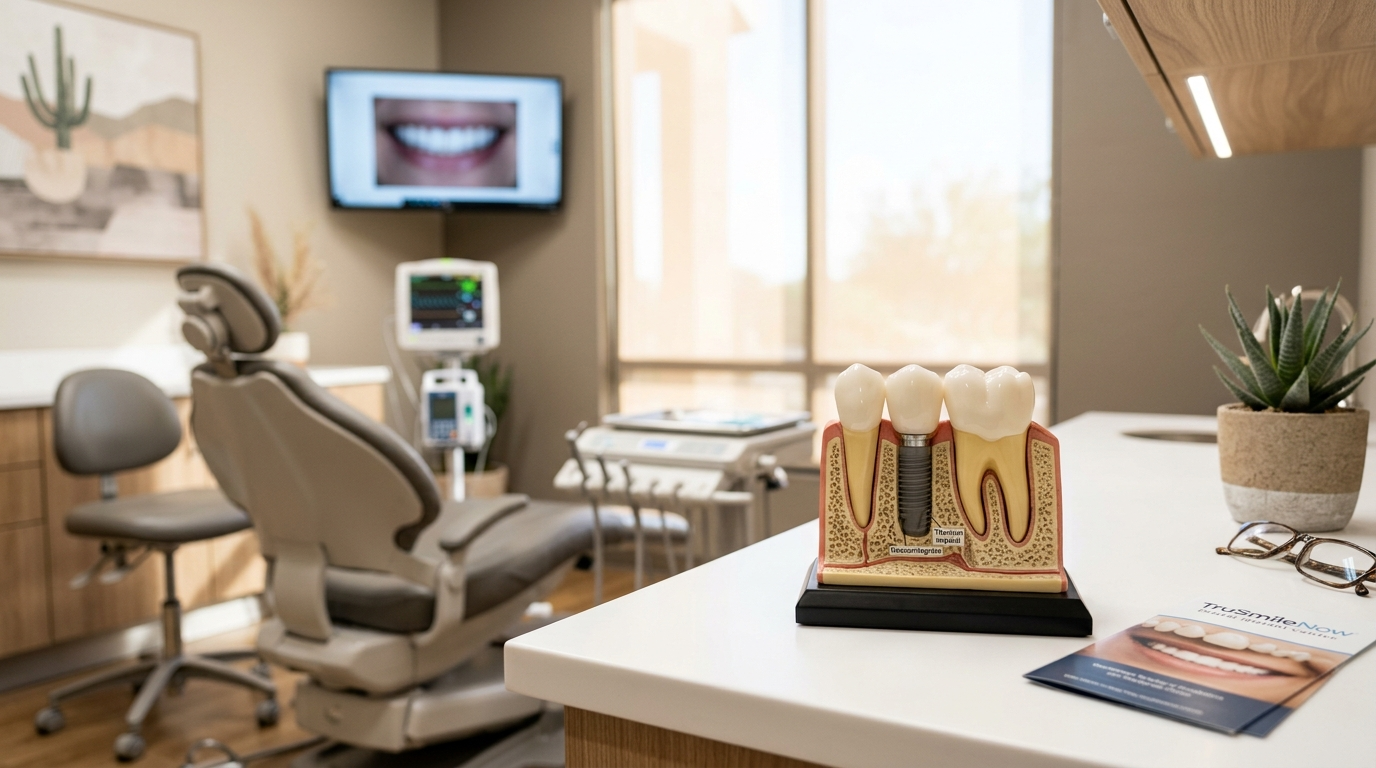
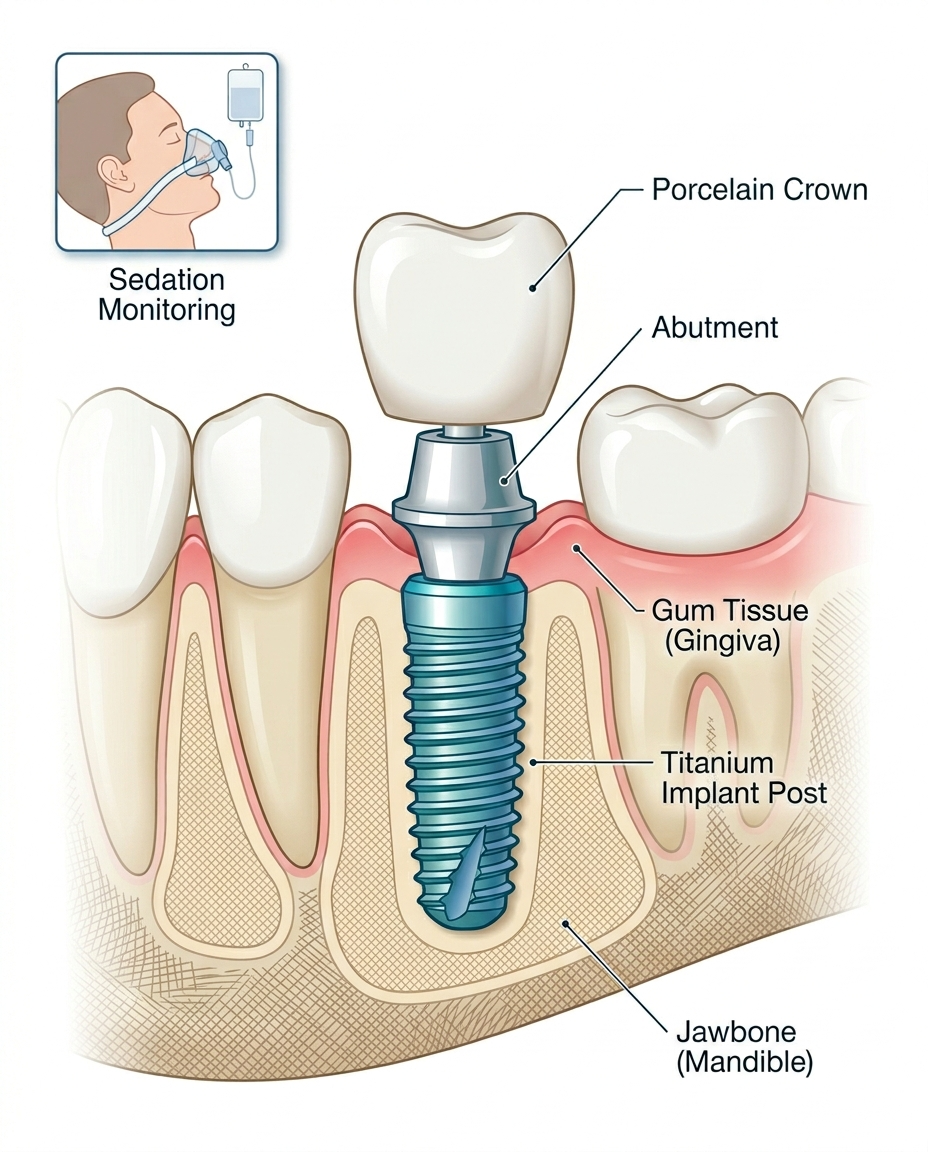
Regardless of which sedation option you choose, the implant placement process follows similar steps. After you are comfortably sedated, the treatment area is thoroughly numbed with local anesthesia. Dr. Han Choi then makes a small incision in your gum tissue, prepares the jawbone, and carefully places the titanium implant post.
For single implants, the procedure typically takes 30 to 60 minutes. Full-arch restorations like All-on-4 may take two to three hours. Throughout the procedure, your vital signs are monitored, and the sedation level is adjusted as needed to keep you comfortable.
Recovery After Sedation
Your recovery experience depends on the type of sedation used. With local anesthesia or nitrous oxide, you will feel back to normal within a few hours. After oral or IV sedation, you may feel groggy for the rest of the day and should plan to rest at home. General anesthesia requires the longest recovery, with grogginess lasting up to 24 hours.
You will receive detailed aftercare instructions, including pain management recommendations, dietary guidelines, and activity restrictions. Most patients report that discomfort after implant surgery is much less than they expected, especially when proper sedation is used during the procedure.
❓ FREQUENTLY ASKED QUESTIONS
Do they put you to sleep for dental implants?
It depends on your specific case and preferences. Most patients receive either local anesthesia with mild sedation or IV sedation (twilight sleep). Complete general anesthesia is reserved for complex cases or patients with severe anxiety. Your dentist will recommend the best sedation option based on the number of implants, procedure complexity, and your comfort level.
Is dental implant surgery painful?
No, you should not feel pain during the procedure because of local anesthesia and sedation. Most patients report feeling pressure or vibration but no sharp pain. After the procedure, some soreness is normal and can be managed with over-the-counter or prescribed pain medication. Many patients say the discomfort is less than they expected.
How long does dental implant sedation last?
The duration depends on the type used. Nitrous oxide wears off within minutes after the mask is removed. Oral sedation effects last 4 to 6 hours. IV sedation typically lasts 2 to 4 hours, with grogginess continuing for several more hours. General anesthesia effects can persist for up to 24 hours. You will need someone to drive you home if you receive anything beyond local anesthesia.
Can I request to be put completely to sleep for dental implants?
Yes, you can request general anesthesia if you have severe dental anxiety or prefer to be completely unconscious during the procedure. However, this option is more expensive, requires additional safety protocols, and involves a longer recovery period. Your dentist will evaluate whether general anesthesia is appropriate based on your medical history and the complexity of your case.
What is the best sedation for multiple dental implants?
For multiple implants or full-arch restorations like All-on-4, IV sedation or general anesthesia is usually recommended. These deeper sedation levels keep you comfortable during longer procedures and allow the surgeon to work efficiently. IV sedation is often the ideal balance between comfort, safety, and cost for complex implant cases.
Does insurance cover sedation for dental implants?
Coverage varies by insurance plan. Some plans cover sedation if it is deemed medically necessary, such as for patients with severe anxiety, special needs, or complex surgical requirements. Many plans do not cover sedation for routine procedures. Our team at TruSmile Now will verify your benefits and help you understand what is covered. We also offer flexible payment plans to help manage out-of-pocket costs.
📍 VISIT TRUSMILE NOW – 3 ARIZONA LOCATIONS
TruSmile Now Peoria
20542 N Lake Pleasant Rd, Suite 113
Peoria, AZ 85382
Phone: (602) 362-0447
Hours: Mon-Thu 9:00 AM – 5:00 PM
TruSmile Now Chandler
2900 W Ray Rd #3
Chandler, AZ 85224
Phone: (480) 393-0687
Hours: Mon-Thu 9:00 AM – 5:00 PM
TruSmile Now Ahwatukee (Phoenix)
4530 E Ray Rd #170
Phoenix, AZ 85044
Phone: (480) 360-4754
Hours: Mon 9-5, Tue 7am-2pm, Wed-Thu 10-7, Fri 8-3, Sat 8am-1pm
Serving Peoria, Chandler, Ahwatukee, Phoenix, Tempe, Mesa, Gilbert, Scottsdale, Glendale, Surprise, and the Greater Phoenix metro area.
New Patient Special: $49 – Includes exam, X-rays, and consultation!
We accept most major insurance including Delta Dental, Cigna, UnitedHealthcare, MetLife, Aetna, BCBS, and more. Medicare Part B accepted for medically necessary treatments.
We offer flexible payment plans through Cherry to make your treatment affordable.
Prefer texting over calling? Lucy, our AI-powered assistant, is always ready to chat. Ask her anything about our services or schedule your visit in seconds.
Ready to learn more about dental implant sedation options? Call any of our locations or schedule online today!
View our before and after gallery to see real patient results!