Same day dentures pain is a common concern for patients considering immediate dentures after tooth extraction. While most patients experience some level of discomfort during the initial healing period, understanding what to expect and how to manage pain effectively can make your transition to dentures much smoother. The good news is that with proper care and modern pain management techniques, the discomfort is temporary and manageable for the vast majority of patients.
At TruSmile Now, Dr. Wremaine Wilson, DDS, brings a passion for transformative dental care to every implant case. With training in general, cosmetic, and implant dentistry, Dr. Wilson focuses on helping patients regain full function and confidence through permanent tooth replacement solutions.

Same day dentures, also called immediate dentures, are placed in your mouth immediately after your remaining teeth are extracted. This means you never have to go without teeth, but it also means your gums are healing while adjusting to the new dentures. This dual process is what contributes to the discomfort many patients experience.
🦷 WHY SAME DAY DENTURES PAIN OCCURS
Understanding the source of same day dentures pain helps you prepare mentally and physically for the adjustment period. Unlike conventional dentures that are fitted after your gums have fully healed (typically 8-12 weeks post-extraction), immediate dentures are placed on fresh extraction sites.
The primary causes of discomfort include:
Extraction site healing: Your gums are essentially open wounds during the first few days. The denture sits directly on these healing tissues, which naturally causes soreness and tenderness. According to the American Dental Association, this is the most significant contributor to initial discomfort.
Pressure points: Because immediate dentures are fabricated before your teeth are extracted, they are based on impressions of your mouth with teeth still present. Once teeth are removed, your gum contours change immediately. This can create areas where the denture presses more firmly against certain spots, leading to sore spots or pressure points.
Swelling and inflammation: After extractions, your gums will swell. This swelling changes the fit of your dentures throughout the day. What feels comfortable in the morning may feel tight by afternoon as swelling increases.
Bone remodeling: Your jawbone begins reshaping itself immediately after tooth loss. Over the first 6-12 months, you will experience significant bone resorption, which changes how your dentures fit. This ongoing change requires adjustments and can cause intermittent discomfort.
📊 PAIN LEVELS: WHAT MOST PATIENTS EXPERIENCE
When patients ask about same day dentures pain, they want to know what is normal versus what requires immediate attention. Most patients report their pain experience follows a predictable pattern.
Days 1-3 (Acute Phase): This is typically when discomfort peaks. Most patients describe the pain as moderate to moderately severe, rating it between 5-7 on a 10-point scale. The pain is primarily from the extraction sites rather than the dentures themselves. You will likely need prescription pain medication during this phase.
Days 4-7 (Early Healing): Pain typically decreases significantly during this period, dropping to a 3-5 range for most patients. You may transition from prescription pain relievers to over-the-counter options. Soreness is more noticeable when eating or during extended wear.
Weeks 2-4 (Adjustment Period): By week two, extraction pain has largely subsided for most patients. Any remaining discomfort is usually related to pressure points or fit issues rather than healing. Pain levels typically range from 1-3, described more as soreness or tenderness than actual pain.
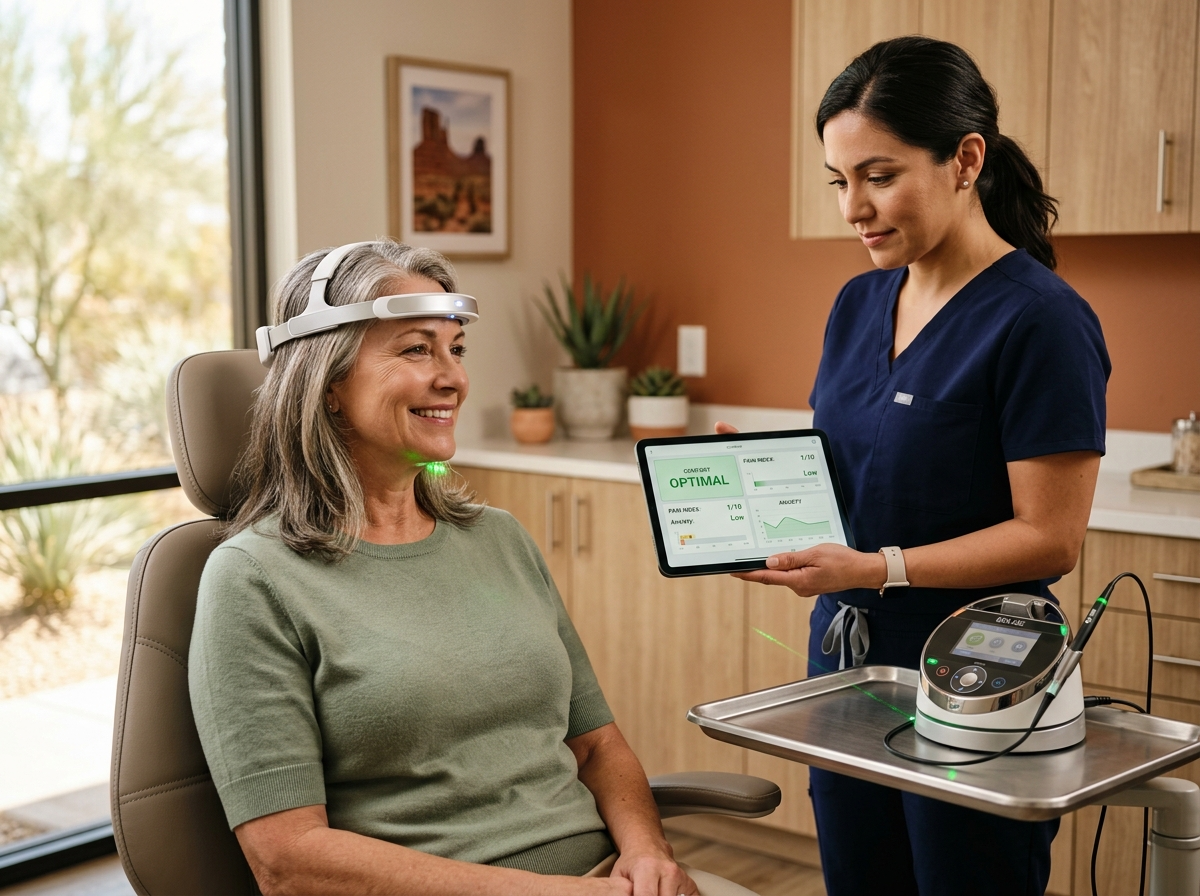
Months 2-6 (Remodeling Phase): As your bone and gums continue changing shape, you may experience occasional sore spots when your dentures need adjustment. These episodes are typically brief and easily resolved with a quick visit to your dentist for a denture adjustment.
Research published in the Journal of Prosthodontic Research found that approximately 70% of immediate denture patients report their pain as manageable with standard pain medication, while only about 10% describe the experience as severely painful.
💊 PROVEN PAIN RELIEF STRATEGIES
Managing same day dentures pain effectively requires a multi-faceted approach. Dr. Wilson and our team at TruSmile Now provide comprehensive pain management guidance to every patient.
Medication Management
Your dentist will prescribe pain medication appropriate for your procedure. Typically, this includes a combination approach. Take medications on schedule during the first 48-72 hours, even if you feel okay, to stay ahead of pain rather than chasing it.
Prescription pain relievers (usually an opioid for 3-5 days) handle acute post-extraction pain. Anti-inflammatory medications like ibuprofen reduce swelling and provide pain relief. Many patients find alternating acetaminophen and ibuprofen every three hours provides better relief than either medication alone.
Cold Therapy
Apply ice packs to your face in 20-minute intervals during the first 48 hours. This significantly reduces swelling, which in turn reduces pain. Focus on the areas corresponding to extraction sites. Never apply ice directly to skin, always use a cloth barrier.
Saltwater Rinses
After 24 hours, gentle warm saltwater rinses (one teaspoon salt per 8 ounces of warm water) help keep extraction sites clean and promote healing. Rinse 4-6 times daily, especially after eating. This simple remedy reduces inflammation and prevents infection, both of which can increase pain.
Dietary Modifications
Stick to soft, cool foods for the first week. Cold foods can actually help numb sore areas. Avoid anything hot, spicy, crunchy, or chewy that could irritate healing tissues or dislodge your dentures. Smoothies, yogurt, mashed potatoes, scrambled eggs, and protein shakes are excellent choices.
Proper Denture Care
Your dentist will provide specific instructions about when to remove your dentures. Some practitioners recommend wearing them continuously for the first 24-48 hours to control swelling and protect extraction sites. Others prefer removal at night from day one. Follow your specific instructions carefully.
When you do remove your dentures, clean them thoroughly but gently. Never sleep with dentures in your mouth after the initial healing period unless specifically instructed, as this can increase soreness and delay healing.
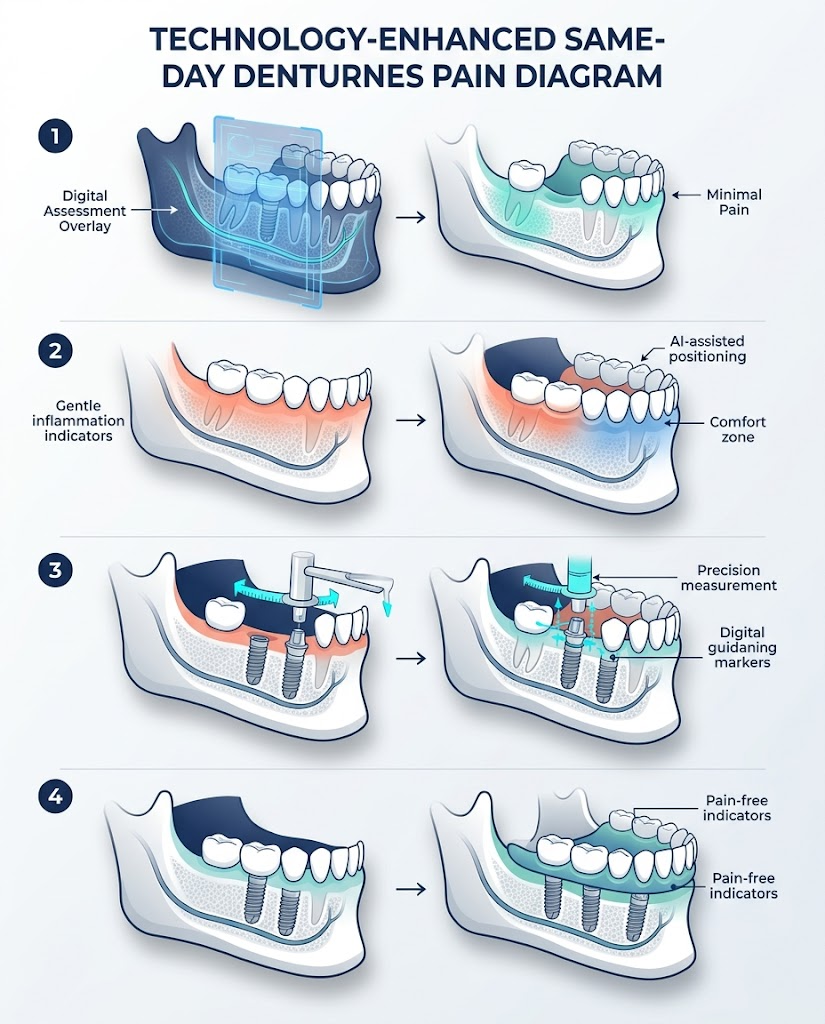
⚠️ WHEN PAIN SIGNALS A PROBLEM
While some discomfort with immediate dentures is expected, certain symptoms indicate complications requiring immediate professional attention. Contact TruSmile Now right away if you experience any of these warning signs.
Severe, increasing pain after day 3: Pain should gradually decrease, not intensify. Worsening pain may indicate infection, dry socket, or a bone fragment.
Persistent bleeding: Some oozing is normal for the first 24 hours, but heavy bleeding or bleeding that restarts after stopping requires evaluation.
Fever above 101°F: This may signal infection at extraction sites.
Foul odor or taste: These symptoms often accompany infection and should not be ignored.
Visible sores or white patches: These could indicate fungal infection, traumatic ulcers, or other complications.
Inability to eat or drink: If pain prevents adequate nutrition and hydration, you need professional intervention.
At TruSmile Now, we offer same-day emergency appointments for patients experiencing complications. Our team understands that prompt attention to problems minimizes discomfort and prevents more serious issues.
🔄 LONG-TERM COMFORT: ADJUSTMENTS AND ALTERNATIVES
Even after initial healing, your relationship with your dentures continues to evolve. Most patients require multiple adjustments during the first year as their mouth shape changes.
Regular adjustment appointments are crucial for long-term comfort. Expect to visit your dentist several times in the first few months for minor adjustments to relieve pressure points and improve fit. These quick appointments can dramatically improve comfort.
Denture relining becomes necessary as your gums and bone remodel. A soft reline can be done immediately if you are experiencing significant discomfort. A hard reline or complete remake is typically needed 6-12 months after extractions once your tissues have stabilized.
For patients who struggle with traditional denture comfort even after the healing period, implant-supported dentures offer a more stable, comfortable alternative. These solutions anchor your dentures to dental implants, eliminating movement and reducing sore spots.
TruSmile Now offers snap-on dentures starting at $3,999 (with 2 implants) or $7,999 (with 4 implants). For patients seeking a permanent solution, our All-on-4 treatment starts at $9,999. We offer flexible payment plans through Cherry to make treatment affordable.
✅ TIPS FOR MINIMIZING DISCOMFORT
Beyond medical interventions, several practical strategies help minimize same day dentures pain and speed your adjustment period.
Practice speaking and eating: Your mouth needs to learn how to work with dentures. Start with easy foods and simple words, gradually progressing to more challenging items. This gradual approach prevents overuse soreness.
Use denture adhesive appropriately: A small amount of quality denture adhesive can improve stability and reduce movement that causes sore spots. However, if you need excessive adhesive, your dentures likely need adjustment.
Massage your gums: When dentures are out, gently massage your gums with clean fingers or a soft cloth. This increases circulation and promotes healing.
Stay hydrated: Adequate hydration keeps your mouth tissues healthy and promotes healing. Dry mouth exacerbates denture discomfort.
Avoid tobacco and alcohol: Both significantly delay healing and increase pain. If you smoke, this is an excellent time to quit.
Get adequate rest: Your body heals during sleep. Prioritize rest during the first week especially.
Maintain realistic expectations: Remember that adjustment takes time. Most patients report feeling comfortable with their dentures by the 4-6 week mark, though complete adaptation may take several months.
🏥 WHY CHOOSE TRUSMILE NOW FOR YOUR DENTURE NEEDS
At TruSmile Now, we understand that concerns about pain and discomfort are significant factors in your treatment decision. Our approach prioritizes your comfort at every stage.
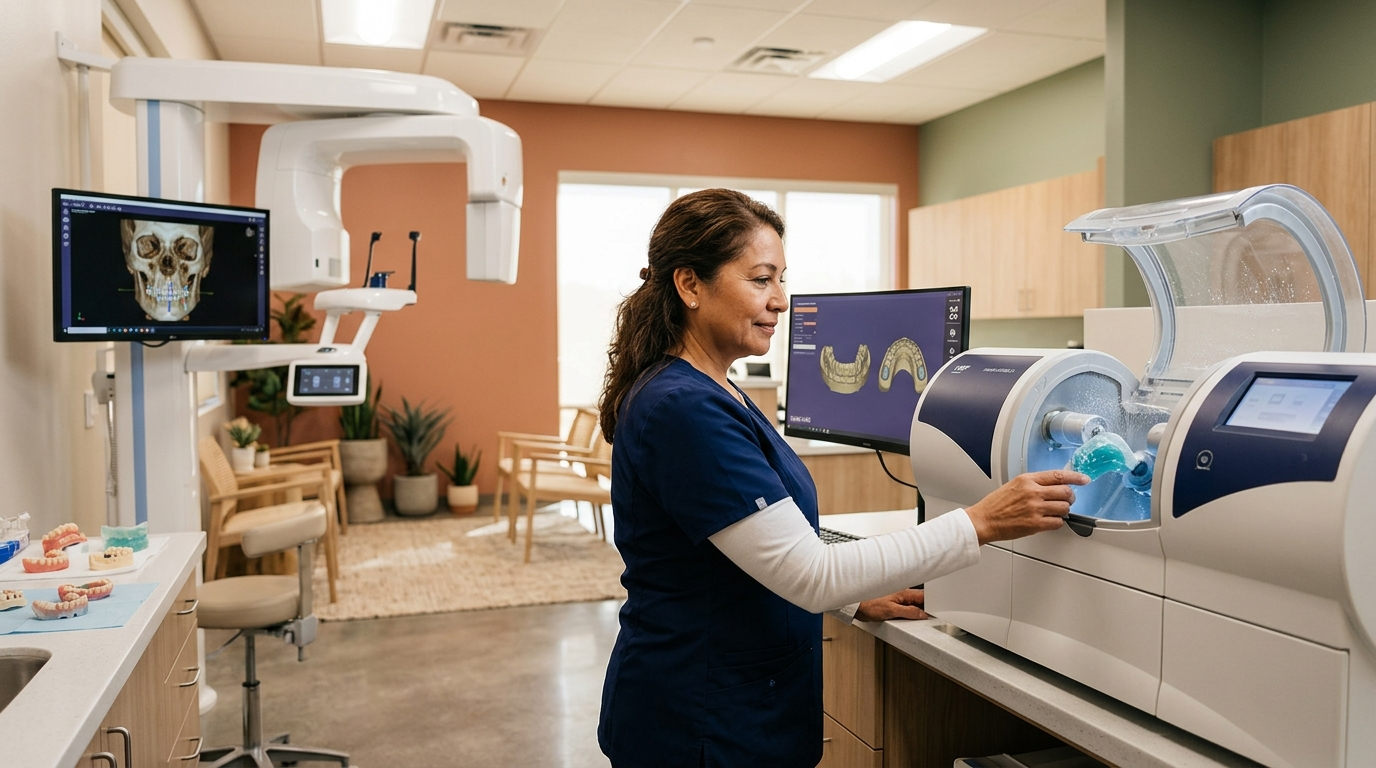
Our state-of-the-art in-house dental lab allows us to create your dentures with exceptional precision and make same-day adjustments when needed. This means less waiting and faster relief if you experience discomfort.
We provide comprehensive pain management protocols tailored to each patient’s needs. Dr. Wilson works closely with you to ensure you have the medications, instructions, and support needed for a comfortable recovery.
Our same-day emergency appointments mean you never have to suffer through a weekend or holiday with denture pain. If problems arise, we see you quickly.
Every new patient receives a thorough consultation including a free 3D Cone Beam CT scan to assess your bone structure and plan the best approach for your situation. This advanced imaging helps us anticipate potential complications and plan accordingly.
We accept most major insurance plans including Delta Dental, Cigna, UnitedHealthcare, MetLife, Aetna, and BCBS. We are also one of the few Arizona practices accepting Medicare Part B for medically necessary treatments.
❓ FREQUENTLY ASKED QUESTIONS
How long does same day dentures pain typically last?
Most patients experience the worst pain during the first 3-5 days after tooth extraction and denture placement. Discomfort gradually decreases over 2-4 weeks, with most patients feeling relatively comfortable by week 4. However, minor soreness requiring adjustments may occur for several months as your mouth continues healing and changing shape. The pain is temporary and manageable with proper care and pain medication.
Is the pain worse than having teeth extracted without dentures?
The extraction pain itself is similar whether you get immediate dentures or not. However, having dentures placed immediately adds an additional layer of discomfort because the appliance sits on healing tissues. That said, many patients prefer this approach because they never have to go without teeth. The psychological benefit of maintaining your appearance often outweighs the additional temporary discomfort for most patients.
Can I take my dentures out if the pain becomes too severe?
You should follow your dentist’s specific instructions about denture removal. Generally, during the first 24-48 hours, dentists prefer you keep dentures in place to control swelling and protect extraction sites. After this initial period, you can typically remove them for short periods to give your gums a break. However, never leave them out for extended periods during the first few weeks, as this can allow excessive swelling that makes reinsertion difficult. If pain is severe, contact your dentist rather than simply removing the dentures.
What pain medication works best for same day dentures pain?
Most dentists prescribe a combination approach. A prescription pain reliever (often a short course of an opioid medication) handles acute pain during the first 3-5 days. Anti-inflammatory medications like ibuprofen (600-800mg every 6-8 hours) reduce swelling and provide pain relief. Many patients find alternating acetaminophen (Tylenol) and ibuprofen every 3 hours provides excellent relief. Always take medications exactly as prescribed and never exceed recommended dosages.
Are implant-supported dentures less painful than traditional immediate dentures?
Implant-supported dentures involve additional surgical procedures to place the implants, which adds short-term discomfort. However, once healed, implant-supported dentures are typically much more comfortable long-term because they do not move or create pressure points like traditional dentures. Many patients find the initial extra discomfort worthwhile for the superior long-term comfort and function. At TruSmile Now, we offer snap-on dentures starting at $3,999 and can discuss whether this option is right for you during your free consultation.
How often will I need adjustments to manage pain and discomfort?
Most patients need 3-5 adjustment appointments during the first 6 months after receiving immediate dentures. Your first adjustment typically occurs within the first week to address any obvious pressure points. Additional adjustments are usually needed at 2 weeks, 1 month, 3 months, and 6 months as your tissues heal and remodel. Some patients need more frequent adjustments, while others need fewer. At TruSmile Now, adjustment appointments are quick and can often be completed the same day you call with a concern.
📍 VISIT TRUSMILE NOW – 3 ARIZONA LOCATIONS

TruSmile Now Peoria
20542 N Lake Pleasant Rd, Suite 113
Peoria, AZ 85382
Phone: (602) 362-0447
Hours: Mon-Thu 9:00 AM – 5:00 PM
TruSmile Now Chandler
2900 W Ray Rd #3
Chandler, AZ 85224
Phone: (480) 393-0687
Hours: Mon-Thu 9:00 AM – 5:00 PM
TruSmile Now Ahwatukee (Phoenix)
4530 E Ray Rd #170
Phoenix, AZ 85044
Phone: (480) 360-4754
Hours: Mon 9-5, Tue 7am-2pm, Wed-Thu 10-7, Fri 8-3, Sat 8am-1pm
Serving Peoria, Chandler, Ahwatukee, Phoenix, Tempe, Mesa, Gilbert, Scottsdale, Glendale, Surprise, and the Greater Phoenix metro area.
New Patient Special: $49 – Includes exam, X-rays, and consultation!
We accept most major insurance including Delta Dental, Cigna, UnitedHealthcare, MetLife, Aetna, BCBS, and more. Medicare Part B accepted for medically necessary treatments.
We offer flexible payment plans through Cherry to make your treatment affordable.
Prefer texting over calling? Lucy, our AI-powered assistant, is always ready to chat. Ask her anything about our services or schedule your visit in seconds.
Ready to learn more about managing same day dentures pain and getting comfortable dentures that fit properly? Call any of our locations or schedule online today!
View our before and after gallery to see real patient results!